






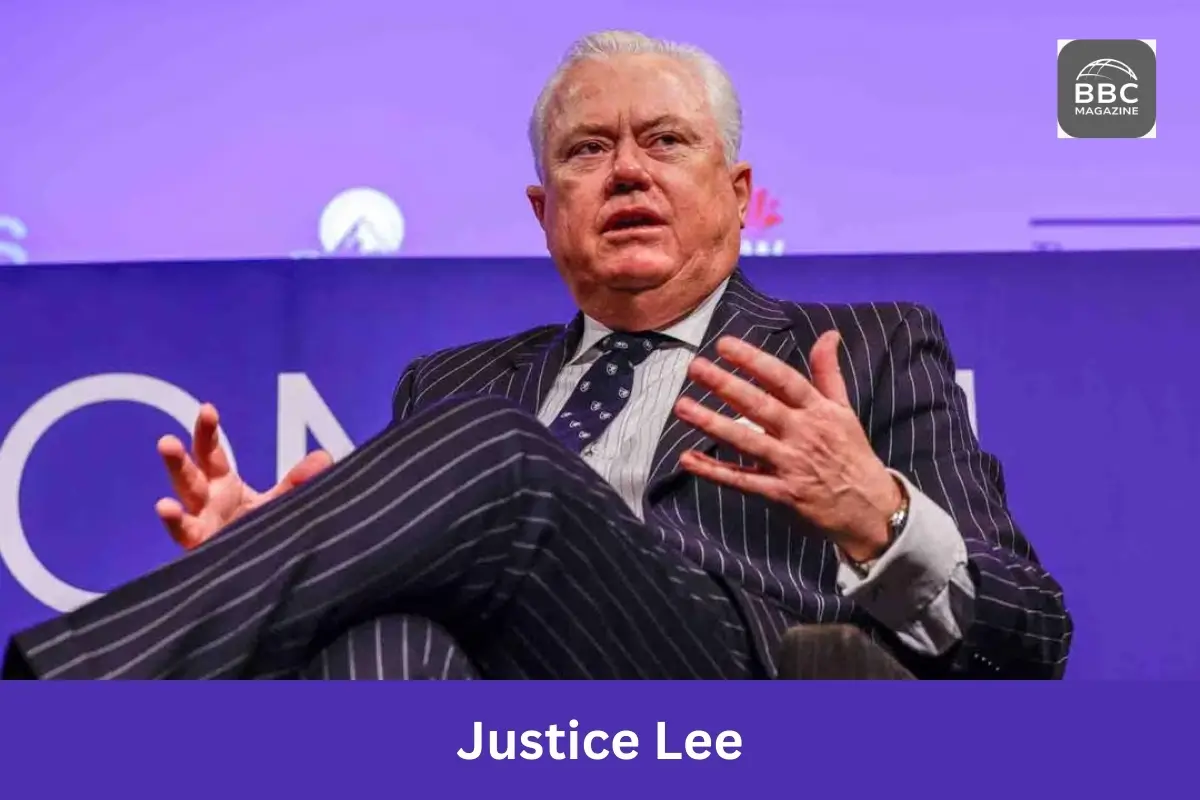
Justice Michael Bryan Joshua Lee is one of the most consequential judicial figures in Australia’s contemporary legal landscape. His career spans elite commercial litigation, national leadership in class actions, sustained public interest advocacy, and judicial authority at the Federal Court level. While judges rarely attract public attention, Justice Lee work has repeatedly intersected with national debate, particularly in defamation law, corporate accountability, and media-related litigation.
Across more than three decades, his professional life has unfolded in every superior court in Australia. From his rapid rise within a top-tier national law firm, through a dominant period at the New South Wales Bar, to his current role shaping Federal Court practice in commercial and defamation matters, Justice Lee’s influence has been structural, enduring, and nationally significant.
Early Life and Education
Justice Lee was born in Perth and raised in Sydney, where he completed his schooling and higher education. His year of birth has not been publicly disclosed, a detail consistent with his long-standing commitment to professional privacy.
He completed an Arts degree in Political Science and later a Law degree at the University of Sydney. This academic pathway is significant. Political science provided a grounding in governance, institutional power, and public discourse, while legal training supplied the technical framework through which those forces operate. Together, they formed the foundation of an approach that would later be evident in cases involving media organisations, public accountability, and the role of courts in democratic society.
Early Legal Career at Corrs Chambers Westgarth
Justice Lee commenced his legal career in 1989 as a solicitor with Corrs Chambers Westgarth, a firm that, during his tenure, evolved into one of Australia’s largest and most influential national law partnerships.
His progression was rapid. By 1992, he had been promoted to senior associate, and in 1995, he became the firm’s youngest partner. Over time, he advanced to become a senior litigation partner and later a national practice group leader.
As a national practice leader, Justice Lee was responsible for overseeing complex litigation across jurisdictions, managing strategic risk for major clients, and coordinating large, multi-party disputes. His role extended beyond advocacy into institutional leadership, shaping how large-scale commercial litigation was conducted within the firm.
Transition to the New South Wales Bar
In 2002, Justice Lee moved to the New South Wales Bar, marking a decisive shift from firm-based litigation to full-time courtroom advocacy. At the Bar, he developed what has consistently been described as a nationwide and eclectic practice.
The term “eclectic” was not incidental. His work spanned a broad range of legal fields, including major commercial disputes, building and construction litigation, insurance law, employment and workplace relations matters, and workplace safety prosecutions. He appeared in matters at both first instance and on appeal, often involving complex factual matrices and significant legal consequences.
Although his practice was predominantly civil, he also appeared in criminal proceedings, particularly where those matters intersected with regulatory enforcement, workplace safety, or public interest considerations. Criminal work was secondary to his civil practice but reflected the breadth of his advocacy.
Justice Lee appeared primarily in Sydney and Melbourne, while also conducting cases in every superior State and Territory court across Australia, reinforcing his standing as a genuinely national practitioner.
Pre-Silk Practice: Breadth and Authority
Before taking silk, Justice Lee had already established himself as a senior figure in complex litigation. He was frequently briefed in matters involving extensive evidence, sophisticated legal issues, and high commercial stakes. His pre-silk practice required mastery of appellate advocacy, procedural law, and case management in large disputes.
This period was formative in developing the analytical discipline and courtroom authority that later became defining features of his judicial style.
Taking Silk in 2011 and Leadership in Class Actions
After nine years at the Bar, Justice Lee took silk in 2011, formally recognising his standing as one of Australia’s leading senior counsel. Following this appointment, he was increasingly briefed as leading counsel, placing him at the strategic centre of major litigation.
This phase of his career coincided with a transformative era in Australian class action law. Justice Lee was involved in many of the most significant representative proceedings of the period and was at the forefront of legal developments concerning litigation funding, procedural fairness, and judicial oversight.
Over more than a generation, his work contributed to shaping how Australian courts approached class actions, balancing commercial realities with the protection of group members and the integrity of the judicial process.
Thought Leadership, Speeches and Legal Scholarship
Justice Lee became a regular and influential presenter at professional seminars and conferences. His contributions evolved over time, reflecting the progression of his career from practitioner to judge.
As a senior advocate, his papers addressed issues such as class action certification, litigation funding, and case management. Following his judicial appointment, his focus expanded to open justice, media freedom, judicial conduct, and institutional responsibility.
He delivered addresses at prominent forums including the Media Freedom Summit, the Communications and Media Law Association Oration, and the Piddington Society Conference, among others. These contributions positioned him as a leading legal thinker engaged with both practical litigation issues and broader questions about the role of courts in public life.
Pro Bono and Public Interest Work
Alongside commercial advocacy, Justice Lee remained actively involved in legally aided matters, pro bono representation, and public interest cases. This work reflected a consistent commitment to access to justice and to the principle that senior legal expertise carries obligations beyond private commercial litigation.
Appointment to the Federal Court of Australia
Justice Lee was appointed to the Federal Court of Australia in 2017. He also holds appointment as an Additional Judge of the Supreme Court of the Australian Capital Territory.
In his judicial role, he hears matters at both first instance and on appeal, with a particular focus on commercial and corporate disputes, defamation, and complex civil litigation. His experience as a senior advocate has informed his approach to case management, evidentiary assessment, and procedural efficiency.
National Coordinating Roles and Institutional Influence
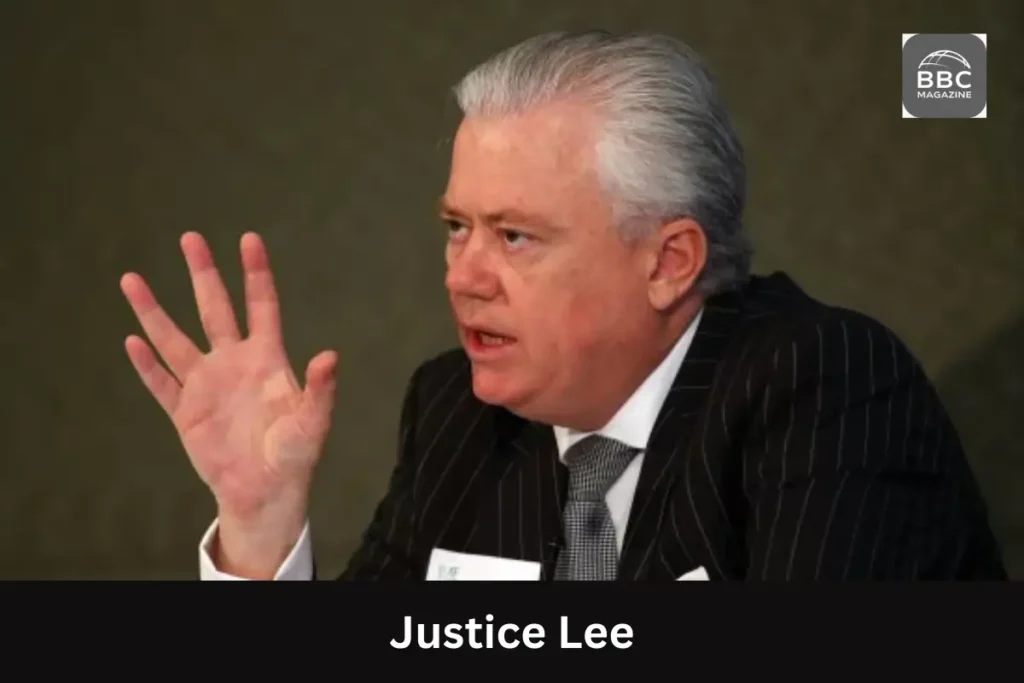
Justice Lee serves as a National Coordinating Judge in the Federal Court’s Commercial and Corporations National Practice Area and also oversees the Court’s defamation work nationally.
These roles extend his influence beyond individual judgments. They involve shaping procedural consistency, coordinating judicial resources, and ensuring coherent management of complex litigation across jurisdictions.
The Lehrmann Proceedings and Public Attention
Justice Lee became widely known outside legal circles during the Lehrmann v Network Ten and Lisa Wilkinson defamation proceedings. The matter ran for more than two years and culminated in a five-week trial that was livestreamed, exposing the judicial process to unprecedented public scrutiny.
He heard evidence from dozens of witnesses, examined extensive documentary material, and delivered a 324-page judgment. Media coverage frequently focused on both the legal reasoning and his carefully chosen language, with Guardian Australia later describing him as a form of “legal celebrity” arising from the case.
In March 2025, Justice Lee returned briefly to address remaining cost disputes. Clearly signalling judicial finality, he stated in open court:
“I’m not having anything more to do with it. I’m finished with this matter.”
He declined to make further cost orders, noting that while neither party had acted unreasonably, the dispute had continued for too long. Importantly, while appeals and related litigation continue, Justice Lee’s role in the proceedings concluded at that point, with subsequent matters moving beyond his authority.
Editorial, Academic and Cultural Contributions
Justice Lee is the section editor for the Australian Law Journal on class actions and a Fellow of the University of Melbourne. His published reviews and essays demonstrate sustained engagement with Australian legal history, jurisprudence, and institutional development.
He has also maintained a long-standing involvement in the arts, having served as a director of the Bell Shakespeare Company, reflecting broader cultural engagement alongside legal practice.
Judicial Philosophy and Reputation
Justice Lee is widely regarded as a judge who combines rigorous legal analysis, firm courtroom control, and structured reasoning. His judgments are noted for clarity, careful language, and an awareness of the broader public and institutional context in which courts operate.
His approach reflects both deep technical expertise and an understanding of the judiciary’s role in maintaining public confidence in the legal system.
Legacy and Long-Term Influence
Justice Michael Bryan Joshua Lee’s influence extends beyond individual cases. His career has shaped how Australian courts manage large-scale litigation, how defamation matters are coordinated nationally, and how class actions are supervised within a modern commercial environment.
From his leadership at Corrs Chambers Westgarth, through national prominence at the Bar, to institutional authority within the Federal Court, his professional journey reflects a sustained contribution to Australian law. As debates around media freedom, corporate accountability, and access to justice continue to evolve, the frameworks Justice Lee has helped shape are likely to influence Australian jurisprudence for many years to come.
Conclusion
Justice Michael Bryan Joshua Lee has played a defining role in shaping Australia’s modern Federal Court practice. From his early rise at Corrs Chambers Westgarth, through a nationally significant career at the New South Wales Bar, to his current position as a Federal Court judge and National Coordinating Judge, his professional journey reflects depth of experience and sustained institutional influence.
His work in complex commercial litigation, class actions, and high-profile defamation matters has contributed to how Australian courts manage large-scale disputes and balance legal principle with public accountability. Beyond individual judgments, Justice Lee’s impact is evident in the procedural frameworks, judicial coordination, and legal reasoning that continue to guide the Federal Court.
As Australia’s legal system responds to evolving challenges in media law, corporate responsibility, and access to justice, Justice Lee’s contribution stands as a lasting influence on the country’s judicial landscape.
FAQs
Who is Justice Michael Bryan Joshua Lee?
Justice Michael Bryan Joshua Lee is a judge of the Federal Court of Australia, appointed in 2017, and an Additional Judge of the Supreme Court of the Australian Capital Territory.
Where was Justice Michael Lee born and educated?
He was born in Perth and raised in Sydney. He completed an Arts degree in Political Science and a Law degree at the University of Sydney.
Which law firm did Justice Michael Lee work for early in his career?
Justice Lee began his legal career in 1989 as a solicitor at Corrs Chambers Westgarth, later becoming the firm’s youngest partner in 1995.
When did Justice Michael Lee join the New South Wales Bar?
He moved to the New South Wales Bar in 2002, where he developed a nationwide practice across Australia’s superior courts.
When did Justice Michael Lee take silk?
Justice Michael Lee took silk in 2011, after nine years at the Bar, recognising his standing as a leading senior counsel.
What types of cases is Justice Michael Lee known for?
He is widely known for commercial litigation, class actions, defamation law, and complex civil proceedings at both trial and appellate levels.
What role did Justice Michael Lee play in the Lehrmann defamation case?
Justice Lee presided over the Lehrmann v Network Ten and Lisa Wilkinson defamation trial, delivering a detailed 324-page judgment before concluding his involvement in 2025.
What leadership roles does Justice Michael Lee hold in the Federal Court?
He serves as a National Coordinating Judge in the Federal Court’s Commercial and Corporations National Practice Area and oversees the Court’s defamation work nationally.