

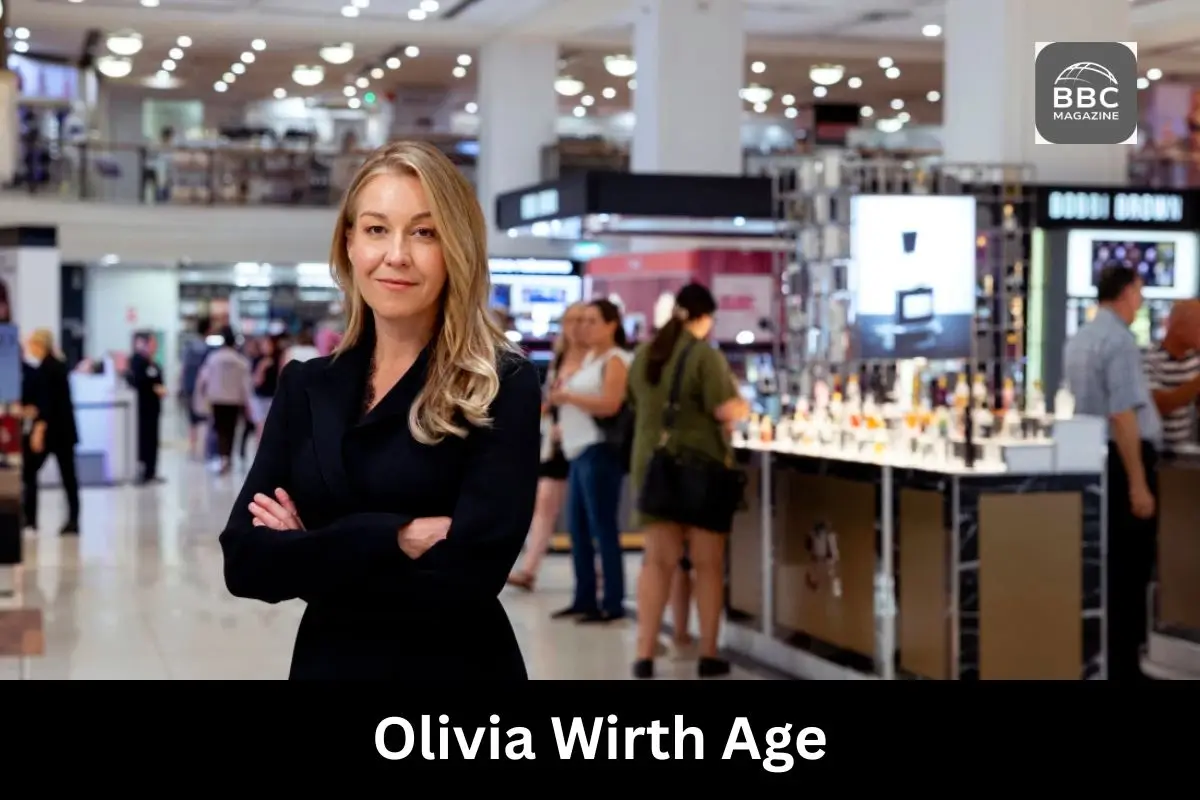
Interest in Olivia Wirth age has grown steadily as she has taken on increasingly prominent roles in Australian corporate life. As executive chairman of Myer Holdings and a former senior executive at Qantas, Wirth occupies a position where business leadership, public accountability, and long-term strategy intersect. Yet, despite her visibility, she remains one of the more private figures in Australian business, with personal details emerging only through careful reporting rather than self-promotion.
This article explores Olivia Wirth’s age in context, along with her professional journey, leadership philosophy, lifestyle, values, and public standing. Rather than focusing on speculation, it draws on verified reporting and established career milestones to present a complete and balanced picture.
Olivia Wirth Age: What the Public Record Shows
Olivia Wirth’s exact date of birth has not been formally released in corporate biographies or board profiles. This is not unusual for senior executives in Australia, where personal details are often excluded from official disclosures.
However, multiple reputable Australian media reports allow us to establish her age with reasonable accuracy. The Australian Financial Review reported in September 2024 that Olivia Wirth was 49 years old. A separate article published in December 2025 referred to her as turning 50 in that year. When considered together, these reports indicate that she was born around 1974 or 1975, placing her at approximately 50 years of age in early 2026.
The focus on Olivia Wirth’s age is not driven by curiosity alone. It reflects broader interest in leadership succession, generational change and the pace at which she has moved into senior positions traditionally associated with much older executives.
Early Life and Educational Foundations
Public information about Olivia Wirth’s early life is limited, reflecting her consistent separation of personal background from professional identity. She was raised in Australia and completed her education locally; she developed early interests in public policy, governance, and communication.
Her formative years coincided with significant shifts in Australian economic and political life. Deregulation, globalisation and the increasing influence of large corporations shaped the environment in which her generation entered the workforce. These broader forces would later influence the industries she worked in and the leadership style she developed.
First Steps into Politics and Public Policy
Before entering corporate Australia, Wirth worked in politics, including time in the office of then Liberal frontbencher Joe Hockey. This experience exposed her to federal policymaking and the realities of public scrutiny.
Working in politics gave me an early understanding of how government decisions affect business outcomes, public confidence, and regulatory frameworks. In industries like aviation, where commercial success closely depends on government policy and public trust, these lessons would later prove invaluable.
Her time in political environments also sharpened her communication skills, particularly the ability to convey complex issues and manage competing stakeholder interests.
Transition from Politics to Corporate Leadership
After leaving politics, Wirth moved into senior roles across tourism and transport organisations. These positions placed her at the intersection of government, industry bodies and commercial operators.
During this period, she developed a reputation for strategic thinking and disciplined communication. Her work involved advocacy, industry coordination and long-term planning rather than short-term promotion, which set her apart from more traditional, marketing-focused executives.
This phase of her career laid the groundwork for her later successes in large, complex organisations, where public perception and policy alignment are as important as financial performance.
Joining Qantas: A Defining Career Chapter
Olivia Wirth joined the Qantas Group in 2009, marking the beginning of a long and influential association with one of Australia’s most recognisable companies. Over more than a decade, she held several senior executive roles, including Group Executive for Brand, Marketing and Corporate Affairs, Chief Customer Officer, and later CEO of Qantas Loyalty.
Her appointment to the Qantas executive team in 2011 attracted attention at the time. Reporting described her as being in her mid-30s, relatively young for such a senior role within a company of Qantas’s scale and history. This early reporting aligns closely with later references used to determine Olivia Wirth’s age more precisely.
Leadership Style at Qantas
During her time at Qantas, Wirth was closely involved in shaping the airline’s public image, customer engagement strategy and government relations. She was in an environment where reputational risk, regulatory scrutiny and operational complexity intersected every day.
Her leadership style was widely described as measured and analytical. Rather than seeking personal visibility, she focused on consistency, lasting trust and disciplined execution. This approach helped her build credibility within the organisation and with external stakeholders.
Transformation of Qantas Loyalty
Wirth’s most prominent role at Qantas came as CEO of Qantas Loyalty. Under her leadership, the frequent flyer programme evolved into a diversified commercial platform, encompassing financial services, retail partnerships, data analytics, and lifestyle rewards.
Qantas Loyalty became one of the airline’s most profitable divisions, providing stability during periods of industry disruption. This success highlighted Wirth’s understanding of customer behaviour, long-term engagement, and the economic value of trust.
Her work in loyalty economics became a defining feature of her professional identity and later influenced her move into retail leadership.
Corporate Reputation and Public Accountability
As a senior Qantas executive, Wirth operated during periods of intense public and political scrutiny. She was involved in managing stakeholder communications during industrial disputes, regulatory negotiations, and moments of reputational pressure.
This experience reinforced her reputation as a disciplined corporate leader rather than a charismatic public figure. She consistently avoided personalised messaging, instead presenting decisions as organisational outcomes grounded in strategy and accountability.
Transition to Board-Level Leadership
In November 2023, Olivia Wirth joined the board of Myer Holdings as an independent non-executive director. The appointment came as Myer faced structural challenges linked to changing consumer behaviours, digital competition and shifting retail economics.
In June 2024, she was appointed Executive Chair, a move that placed her at the centre of Myer’s strategic direction. At around 49 years of age, her appointment was widely interpreted as an effort to inject long-term thinking and a customer-focused strategy into a legacy retail brand.
Governance Debate and Executive Chair Role
Wirth’s appointment as executive chair sparked debate within Australian corporate governance circles. Combining executive authority with board leadership raised questions about balance, oversight and accountability.
Supporters argued that her experience and disciplined approach made her well-suited to guiding Myer through a period of transition. Critics cautioned that the structure required careful management to avoid concentration of power.
Throughout this discussion, Wirth herself maintained a low public profile, allowing the focus to remain on governance principles rather than personal narrative.
Leadership Philosophy and Strategic Outlook
Across her career, Wirth has demonstrated a consistent leadership philosophy centred on long-term values rather than short-term results. Her background in loyalty and customer engagement supports the belief that sustainable growth comes from trust, relevance, and organisational culture.
People often discuss her age alongside her experience, demonstrating this philosophy. At around 50, Wirth combines decades of senior leadership with the capacity to influence future transformation, a balance that Australian business increasingly values.
Financial Standing and Net Worth Context
Olivia Wirth’s personal net worth is not publicly disclosed, and no official records detail her private financial position. As with most Australian executives, estimates are based on publicly reported remuneration and board fees rather than confirmed asset holdings.
Given her long tenure in senior executive roles at Qantas, combined with board appointments at ASX-listed companies, analysts place her wealth in the multi-million-dollar range. These estimates reflect cumulative career earnings rather than liquid wealth and should be treated as indicative only.
Personal Life and Relationships
Olivia Wirth married former union leader Paul Howes in 2014. Media coverage at the time described both as being in their late 30s, consistent with later reporting used to establish Olivia Wirth’s age.
Beyond this relationship, Wirth has kept her personal life largely out of the public domain. There is limited information available about her family or domestic arrangements, reflecting her long-standing preference for privacy.
Lifestyle and Personal Values
Wirth does not cultivate a public lifestyle persona. She avoids social media and lifestyle media coverage.
However, her involvement with organisations like the Great Barrier Reef Foundation and UNICEF Australia reflects her values. Her affiliations indicate a keen interest in sustainability, social responsibility, and long-term community impact.
Her lifestyle appears to be structured around professional responsibility rather than public visibility, with significant time devoted to governance, strategy, and leadership obligations.
Media Perception and Public Image
Media coverage of Olivia Wirth is typically analytical rather than personal. Discussions about Olivia Wirth’s age tend to arise in the context of leadership succession, corporate strategy, and generational change, not personal intrigue.
This restrained public image has contributed to her standing as a serious, disciplined executive rather than a personality-driven leader.
Why Olivia Wirth’s Age Matters in Context
Interest in Olivia Wirth’s age reflects broader questions about leadership renewal in Australian business. At around 50, she represents a cohort of executives who have experienced multiple economic cycles while remaining positioned to lead future transformation.
Her age underscores the pace of her career progression and highlights changing expectations around who leads major Australian companies.
The Road Ahead
As of early 2026, Olivia Wirth remains at a pivotal stage of her career. Her leadership at Myer will significantly influence the assessment of her professional legacy.
Whether she stays in retail leadership for a long time or moves on to board-level governance, her impact on Australian corporate strategy and customer-focused leadership is already well-established.
Conclusion
While Olivia Wirth’s exact date of birth has not been publicly released, reliable Australian reporting confirms she was born around 1974 or 1975, making her approximately 50 years old as of early 2026. Interest in Olivia Wirth’s age is closely linked to her rapid rise in Australian business and her presence at the centre of major corporate transitions.
Her career combines policy insight, disciplined corporate leadership and long-term strategic thinking. As Australian businesses continue to adapt to economic and social change, Olivia Wirth remains a key figure. Her age, experience, and influence position her firmly in the national business conversation.
FAQs
Who is Olivia Wirth?
Olivia Wirth is an Australian business executive best known for senior leadership roles at Qantas Group and her current position as Executive Chair of Myer Holdings. She has extensive experience with brand strategy, customer engagement, and corporate governance.
When did Olivia Wirth become CEO of Myer?
Olivia Wirth was appointed Executive Chair of Myer Holdings in June 2024. Myer has not publicly appointed her as CEO; the role combines executive leadership with board oversight.
When did Olivia Wirth leave Qantas?
Olivia Wirth left Qantas in 2023 after more than a decade with the airline, where her final role was CEO of Qantas Loyalty, one of the group’s most profitable divisions.
How do I contact Olivia Wirth?
Olivia Wirth does not provide personal contact details publicly. Professional communication is typically handled through Myer Holdings’ corporate offices or investor relations channels.
What is the salary of a Qantas captain?
A Qantas captain’s salary varies by aircraft type and seniority but is generally reported to range from around AUD $250,000 to over $400,000 per year, excluding allowances and benefits.
Why did Jetstar fail?
Jetstar has not failed. It remains a profitable low-cost airline within the Qantas Group, though it has faced operational challenges, price pressures, and customer service criticism at various times.
Why is Myer struggling?
Myer has faced challenges due to changing consumer habits, online competition, high operating expenses and declining department store traffic, which impacts revenue and long-term growth.
How old is Myer?
Myer was founded in 1900, making it over 120 years old and one of Australia’s longest-running retail brands.