






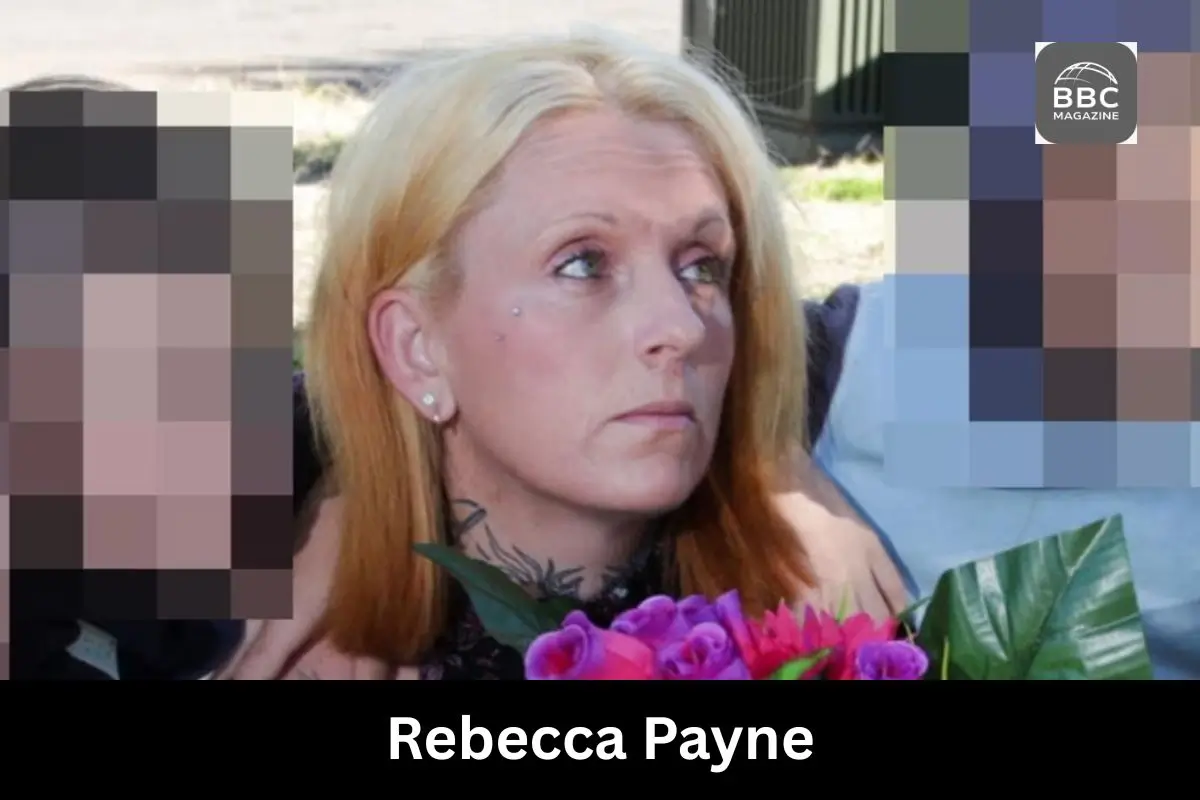
The case of Rebecca Payne has become one of the most closely examined criminal matters in modern Australian legal history. It is not a case clouded by uncertainty over what happened. A jury established the facts of the killing at trial, accepted them, and upheld them on appeal. What has continued to attract attention is how the justice system responded when a deliberate homicide occurred at the end of more than a decade of sustained abuse.
Rebecca Payne murdered her husband, Noel Payne, at their rural property in Walpeup in Victoria’s northwest on 1 September 2020. She drugged him with temazepam-laced biscuits and placed him in a freezer, where he died. In 2023, she was convicted of murder. In 2024, the Victorian Court of Appeal reduced her sentence after finding that the original punishment did not adequately reflect the cumulative damage caused by prolonged abuse.
This article brings together all verified and publicly available information from Australian court judgments and mainstream reporting. It traces the background of the relationship, the events of the killing, the police investigation, the trial, the sentencing, the appeal, and the broader legal significance of the case.
Walpeup and the Significance of Rural Isolation
Walpeup is a small farming locality in Victoria’s northwest, surrounded by open farmland and distant from major population centers. Life in such communities is often private and self-contained, with limited access to services, public transport, or informal oversight from neighbors.
For Rebecca Payne, this isolation became a central feature of her lived reality. Courts later accepted that the property’s remoteness restricted Rebecca Payne’s access to support and reinforced her husband’s control. husband’s control. Opportunities for casual disclosure were rare, witnesses to daily life were scarce, and escape routes were difficult.
The Court of Appeal later observed that isolation was not incidental but an important factor that intensified the sense that her situation was inescapable. Abuse occurring in such settings can remain hidden for years, sustained not only by fear but by geography.
A Marriage Defined by Power and Control
The marriage between Rebecca Payne and Noel Payne was not characterized by mutual conflict or volatility. Courts accepted that it was defined by domination exercised over more than a decade.
Evidence before the court established that Noel Payne exerted near-total control over his wife’s daily life. She was subjected to physical violence and sexual abuse. Her movements were monitored and restricted. She was not allowed to shower alone. Her eating habits and weight were controlled. Household finances were managed by her husband, limiting her independence and decision-making.
One of the most confronting facts accepted into evidence was that Rebecca Payne was forced to have her husband’s name tattooed on her body. Judges later described this as humiliating and degrading, reinforcing ownership and submission rather than affection.
She was also prevented from attending her son’s funeral. The Court of Appeal later highlighted this as emblematic of the cruelty she endured and the extent to which her autonomy had been stripped away.
Coercive Control and Psychological Entrapment
Although the phrase “coercive control” was not always used explicitly during the trial, the courts’ reasoning aligned closely with that concept. Coercive control refers to patterns of behavior designed to dominate another person through fear, restriction, surveillance, and psychological erosion rather than constant physical violence.
Australian courts increasingly recognize that such control can trap victims in abusive relationships by dismantling their sense of agency and perceived options. In Rebecca Payne’s case, judges accepted that the abuse was cumulative and escalating, shaping her thinking over time.
In its reasons, the Court of Appeal described the environment created by Noel Payne as “sordid and stifling” and found that Rebecca Payne endured “intolerable and seemingly escalating emotional and physical torment.” This language reflected judicial acceptance that her life was shaped by long-term domination rather than isolated incidents.
The Psychological Impact of Long-Term Abuse
By 2020, Rebecca Payne had spent most of her adult life under control. Evidence accepted by the courts suggested that she lived in a state of constant anxiety, modifying her behaviour to avoid punishment.
The appeal judges later observed that she had effectively lost her thirties to abuse and now faced losing much of her forties to imprisonment. This observation was not offered to excuse the crime but to recognize the scale of psychological harm inflicted over time.
Such recognition reflects a growing judicial understanding that prolonged abuse can erode a person’s capacity to perceive alternatives, even when those alternatives appear obvious to outsiders.
The events of September 1, 2020
The murder of Noel Payne occurred on 1 September 2020 at the Walpeup property. No exact time of day has been publicly released in court judgments or media reporting.
On that day, Rebecca Payne prepared homemade lemon biscuits. She crushed tablets containing temazepam, a sedative sleeping medication, and mixed the drug into the icing. She then served the biscuits to her husband.
Temazepam is known to cause drowsiness and loss of consciousness. The jury accepted that Rebecca Payne understood these effects. After consuming the biscuits, Noel Payne became unconscious or severely incapacitated.
Rebecca Payne then wrapped him in a blanket, secured it with duct tape, and placed him inside a chest freezer located in the backyard. He did not regain consciousness. Medical and forensic evidence later confirmed that he died after being placed in the freezer, with both the drugging and the confinement contributing to his death.
Intention, Planning, and the Legal Threshold for Murder
A central issue at trial was whether Rebecca Payne intended to kill her husband or merely to sedate him. The defense argued that she did not intend death and acted under psychological pressure. The prosecution argued that the preparation of drug-laced food, combined with subsequent concealment, demonstrated foresight and intention.
The jury accepted the prosecution’s case. They found that Rebecca Payne knew death was a likely outcome of her actions. Under Victorian law, knowledge that death is a probable consequence satisfies the mental element required for murder.
This finding later became decisive on appeal. While her sentence was reduced, the murder conviction was upheld because the legal threshold for murder had been met.
Why Manslaughter Was Rejected
The jury was directed toward alternative verdicts, including manslaughter. Manslaughter was rejected because the killing did not arise from a sudden triggering incident or immediate confrontation.
Evidence showed planning, preparation, and post-offense concealment. Under Victorian law, prolonged abuse alone does not reduce murder to manslaughter unless specific legal thresholds are met, such as sudden provocation or lack of intent. Those thresholds were not met in this case.
The Days After the Killing
Following the killing, Noel Payne’s body remained inside the freezer for approximately three days. During this period, Rebecca Payne did not contact police or emergency services.
Instead, she attempted to prevent discovery. She told others that the freezer contained rotten meat and discouraged them from opening it. She asked a neighbor to look after the freezer, claiming it was broken and full of spoiled contents.
Prosecutors later relied on this conduct as evidence of consciousness of guilt rather than panic or confusion.
Discovery of the Body and Initial Police Response
Several days after the killing, the freezer was opened despite warnings. Noel Payne’s body was discovered wrapped and concealed inside. Police were contacted immediately.
Victoria Police attended the property, secured the scene, and commenced a homicide investigation. Public reporting does not specify the exact hour police were first contacted or the precise sequence of arrest and questioning.
Police Interviews and Investigation Findings
Rebecca Payne did not make an immediate full confession to police. Early interactions were described in reporting as distressed and fragmented rather than clear admissions.
Police relied on forensic evidence, witness statements, and post-offence conduct to assess credibility. Toxicology confirmed the presence of temazepam administered orally. There were no signs of a struggle at the time Noel Payne lost consciousness.
Medical evidence established that death occurred after he was placed in the freezer.
Witness Evidence and Abuse History
Police interviewed multiple witnesses, including people familiar with the household. Several described Noel Payne as abusive, controlling, and violent.
Some witnesses reported behavior extending beyond Rebecca Payne, reinforcing the pattern of domination accepted by the courts. The prosecution accepted the existence of abuse but maintained that it did not legally justify the killing.
Arrests and Charges
Rebecca Payne was 41 years old when she was taken into custody in September 2020 and charged with murder. Noel Payne was 68 years old at the time of his death.
She remained in custody as the case progressed through the courts.
The Supreme Court Trial in Mildura
The trial was held in the Supreme Court in Mildura and lasted three weeks. The defence sought either acquittal or a verdict of manslaughter, relying on evidence of psychological entrapment and prolonged abuse.
The prosecution argued that the killing was planned and deliberate, occurring outside immediate danger. The jury was instructed on murder, manslaughter, self-defence, and the relevance of family violence.
On 15 March 2023, after two days of deliberation, the jury returned a verdict of guilty of murder.
Sentencing by Justice Rita Incerti
In June 2023, Justice Rita Incerti sentenced Rebecca Payne to 16 years’ imprisonment, with a non-parole period of 10 years.
Justice Incerti acknowledged the extensive physical, emotional, and sexual abuse and applied a substantial sentencing discount. She described sentencing as a difficult task. However, she emphasised the seriousness of the offence, including planning and concealment.
National Sentencing Context
According to the Sentencing Council of Australia, the average murder sentence is approximately 22.5 years, with the shortest recorded being about 7.67 years.
A 12-year sentence for murder is rare in Australia. Even accounting for abuse-related cases, Rebecca Payne’s final sentence sits near the lowest end nationally.
Appeal: Conviction Upheld, Sentence Reduced
Rebecca Payne appealed both her conviction and sentence. The appeal against conviction failed, with the Court of Appeal finding no legal error in jury directions or verdict.
The sentence appeal succeeded.
In November 2024, Justices Stephen McLeish, Stephen Kaye, and Terence Forrest reduced her sentence to 12 years, with a non-parole period of seven years.
Appeal Court Reasoning
The appeal judges found the original sentence manifestly excessive, despite the significant discount already applied. They described the case as “wholly exceptional.”
They cited the cumulative abuse, the “sordid and stifling environment,” the impact on her children, her age, and her excellent prospects of rehabilitation as decisive factors reducing moral culpability.
Conclusion
The Rebecca Payne case sits at the uneasy intersection of criminal responsibility and lived reality. The courts were never asked to decide whether a life had been taken unlawfully — that was established beyond dispute. What they were required to confront was how the law should respond when a deliberate act of murder emerges from years of sustained abuse, control, and isolation that left few visible paths to escape.
Rebecca Payne’s conviction for murder reflects the firm boundaries of Australian criminal law. Planning, intention, and concealment meant the legal threshold for murder was met, and the jury’s verdict was rightly upheld on appeal. At the same time, the reduction of her sentence acknowledged something the law has historically struggled to accommodate: the cumulative damage caused by prolonged domestic abuse and coercive control, particularly in environments where isolation deepens vulnerability.
The final sentence does not diminish the seriousness of Noel Payne’s death, nor does it excuse the act that ended his life. Instead, it represents an attempt by the courts to weigh punishment against context, recognizing that moral culpability is not always fixed or simple. By describing describing the case as wholly exceptional, the Court of Appeal signaled that this outcome was not a new standard but a response to extraordinary circumstances.
Ultimately, the Rebecca Payne case underscores the limits of self-defense laws, the evolving recognition of coercive control, and the difficulty of delivering justice in situations shaped by long-term harm. It remains a sobering reminder that when abuse goes unseen and unaddressed for years, the consequences can be irreversible—not only for those who suffer it, but also for the justice system tasked with responding after the damage is already done.
FAQs
Who is Rebecca Payne?
Rebecca Payne is a Victorian woman who was convicted of murdering her husband, Noel Payne, in 2020 after a jury trial in the Supreme Court of Victoria.
How did Rebecca Payne kill her husband?
Rebecca Payne killed her husband by feeding him lemon biscuits laced with the sleeping drug temazepam, then placing him inside a chest freezer at their rural Walpeup property.
When did the murder take place?
The murder occurred on 1 September 2020. An exact time of day has not been publicly released in court judgments or media reporting.
Why was Rebecca Payne’s sentence reduced on appeal?
The Victorian Court of Appeal reduced her sentence after finding the original term did not adequately reflect the cumulative impact of more than a decade of severe domestic abuse and coercive control.
Is Rebecca Payne still guilty of murder?
Yes. Her murder conviction was upheld on appeal. Only the length of her sentence was changed, not the verdict.
Why wasn’t the charge reduced to manslaughter?
The jury rejected manslaughter because the killing involved planning, preparation, and concealment and did not occur during an immediate threat or sudden confrontation.
How long is Rebecca Payne’s final prison sentence?
Her final sentence is 12 years’ imprisonment, with a non-parole period of seven years, reduced from the original 16-year sentence.
When will Rebecca Payne be eligible for parole?
Rebecca Payne will be eligible to apply for parole in December 2027. Parole is not automatic and depends on parole board assessment.