





Dan Vickerman remains one of the most respected figures of modern Australian rugby, not because of celebrity or statistics alone, but because of how he played, how he led, and what his life revealed about the pressures faced by elite athletes after retirement. He was an uncompromising lock forward, a Wallabies vice-captain, and a player trusted by coaches across eras. His death in 2017 forced Australian sport to confront issues that had long existed beneath the surface.
This is the complete and verified account of Dan Vickerman’s life and playing career, from his early years and rise through Australian rugby to his influence on player welfare and the lasting impact of his story.
Early Life and Move to Australia
Daniel David Vickerman was born on 4 June 1979 in Cape Town, South Africa. He was educated at Bishops Diocesan College, a school with a strong rugby heritage, where his height, strength, and competitive instincts made him a natural lock forward from an early age.
In 1999, he represented South Africa at Under-19 level, an achievement that placed him among the country’s most promising young forwards. Despite this, the depth of South African rugby limited his immediate progression to senior level. At the age of 21, Vickerman made a decisive move that would shape the rest of his life. In 2000, he relocated to Australia, driven by a desire to pursue both rugby opportunity and higher education.
He enrolled at the University of Sydney and entered the Sydney club rugby system, a pathway that proved critical to his rapid rise. His performances in club rugby quickly attracted attention, and within a year of arriving in Australia he progressed into the national pathway, representing Australia at Under-21 level. This swift transition reflected both his adaptability and his commitment to development.
Rugby Code and Playing Role
Dan Vickerman played rugby union exclusively. He did not play professional rugby league at any stage. All of his elite rugby was within the fifteen-a-side code, spanning Super Rugby, Test rugby, and university and club rugby in Australia and England.
He played as a lock forward, a position demanding physical resilience, technical skill in the line-out, and repeated involvement in contact situations. His role was rarely glamorous, but it was central to how his teams functioned.
Early Professional Years and the Brumbies
Vickerman made his Super Rugby debut in 2001 with the ACT Brumbies, joining the franchise during one of its strongest and most innovative periods. The Brumbies’ success was built on structure, discipline, and intelligent forward play, and Vickerman fitted seamlessly into that environment.
As a young lock, his responsibilities centred on line-out execution, defensive pressure, ruck clean-outs, and maintaining physical standards. Coaches valued his willingness to absorb heavy workloads, while teammates trusted him to hold the line when matches became confrontational.
His development at the Brumbies laid the foundation for his Test career and established him as a reliable forward capable of meeting international demands.
Waratahs Career and Senior Leadership
In 2004, Vickerman moved to Sydney and joined the NSW Waratahs. Over several seasons, he became a senior figure within the squad, respected for preparation, professionalism, and consistency rather than public profile.
Across his Super Rugby career with the Brumbies and Waratahs, Vickerman played approximately 86 matches. This figure is particularly significant given the interruptions caused by injury and later by periods of overseas study. His longevity at Super Rugby level reflected the trust placed in him by coaching staff and selectors.
Wallabies Career and International Recognition
Dan Vickerman made his Wallabies Test debut against France in 2002, a match won by Australia in Sydney. The debut came under coach Eddie Jones, who valued Vickerman’s physical edge and discipline. That trust continued across successive coaching regimes.
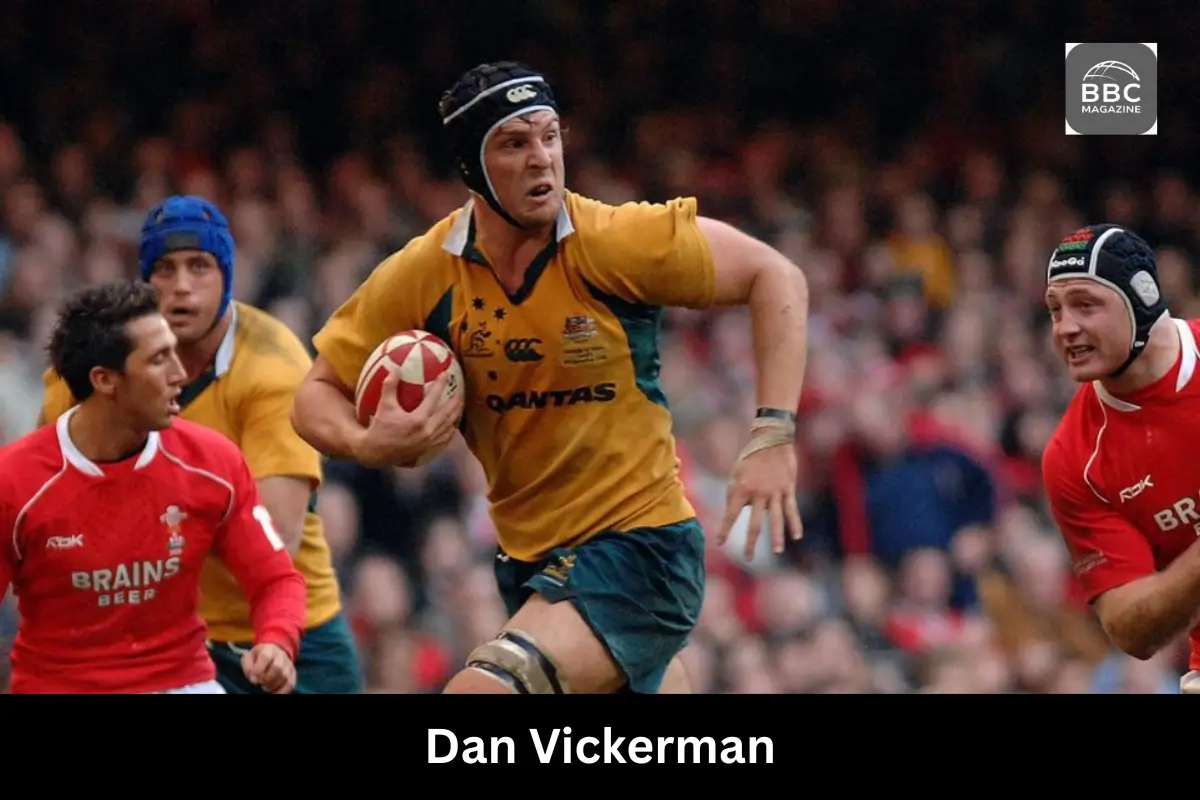
Between 2002 and 2011, Vickerman earned 63 Test caps for Australia, establishing himself as one of the most durable locks of his era. He competed regularly in the Tri Nations against New Zealand and South Africa, matches that demanded physical resilience and mental toughness.
Vickerman represented Australia at three Rugby World Cups. In 2003, he was part of the squad that reached the final. He also featured in the 2007 tournament before stepping away from international rugby to study overseas. After returning to Australia, he regained his place in the Wallabies squad and was selected for the 2011 Rugby World Cup in New Zealand.
His final Test appearance came in the semi-final of that tournament against the All Blacks in Auckland.
Leadership Style and Playing Reputation
In 2006, Vickerman was appointed vice-captain of the Wallabies, a reflection of the respect he commanded within the playing group. His leadership was quiet and practical. He led through preparation, discipline, and physical examples rather than speeches.
Standing 203 centimetres tall, he was widely described as an uncompromising competitor. His strengths lay in line-out leadership, defensive work, and repeated involvement in contact. He was a forward trusted in high-pressure situations where structure and control mattered more than attacking flair.
Opponents respected his toughness, teammates relied on his consistency, and coaches valued his reliability across different game plans.
Education, Cambridge, and Rugby in England
One of the most distinctive aspects of Vickerman’s career was his commitment to education. In 2008 and 2009, he stepped away from Australian rugby to study at the University of Cambridge, completing a degree in Land Economics.
While in England, he continued to play rugby, making appearances for Northampton Saints and captaining Cambridge University. In December 2009, he led Cambridge to a 31–27 Varsity Match victory over Oxford at Twickenham, one of the most prestigious fixtures in university rugby.
Australian media later described this period as one of the most fulfilling chapters of his career, combining academic achievement with leadership on the field.
Injuries, Comeback, and Retirement
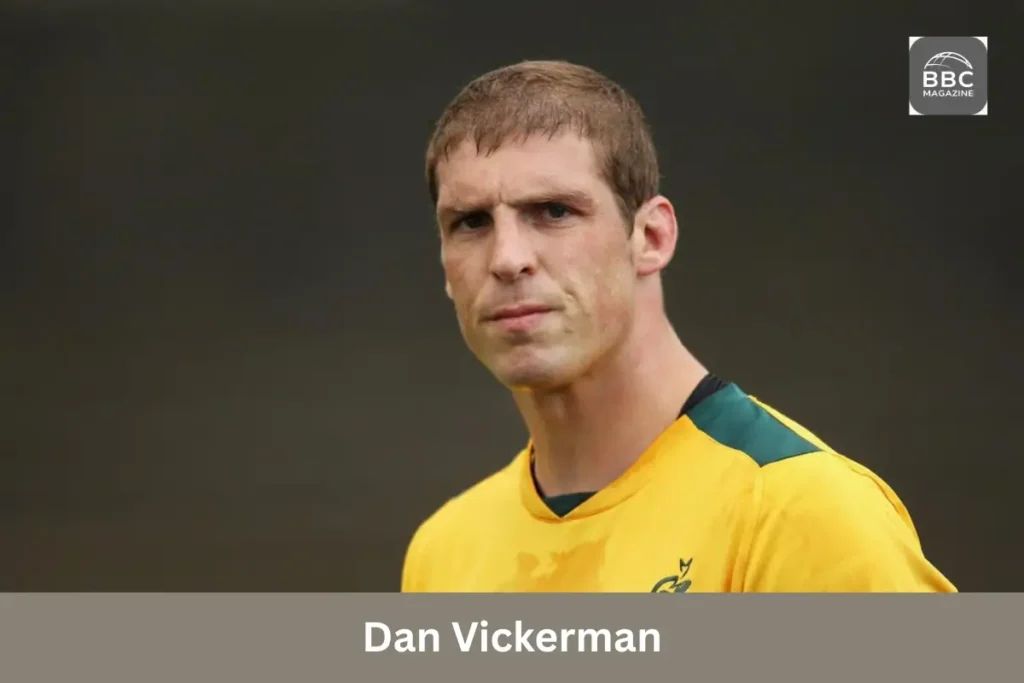
Vickerman’s career was repeatedly disrupted by stress fractures in his right leg. Despite surgery and extensive rehabilitation, the injury continued to cause pain and restrict movement.
After returning from England, he regained his place with the Waratahs and earned selection for the 2011 Rugby World Cup, demonstrating determination and resilience. However, medical advice eventually made it clear that continuing at elite level posed long-term risks.
In 2012, at the age of 32, Dan Vickerman was forced to retire from professional rugby.
Life After Rugby and Transition Challenges
After retiring, Vickerman transitioned into commercial real estate and property-related work, applying his academic training and analytical approach. He also remained involved in the game through the Rugby Union Players’ Association, contributing to efforts aimed at supporting players transitioning out of professional sport.
Despite this preparation, retirement proved challenging. Former Wallabies captain Owen Finegan later revealed that Vickerman had spoken openly about how difficult he found the transition away from elite rugby, particularly after more than a decade in a highly structured professional environment.
Former teammate Ben Alexander later reflected that Vickerman may also have continued to struggle with physical pain related to his leg injury, which could have limited his ability to exercise. Alexander emphasised that post-career difficulties are rarely caused by a single factor, but often arise from a combination of injury, loss of routine, and the emotional shift away from elite competition.
Death and Official Findings
Dan Vickerman died at his home in Sydney in February 2017, aged 37. His death was later ruled a suicide. Australian authorities and media did not release detailed circumstances, and reporting focused on his career, character, and the broader issues surrounding athlete welfare.
Following his death, Rugby Australia confirmed that players and coaches were offered counselling and acknowledged the need for stronger monitoring of players transitioning into retirement.
CTE, Research, and Broader Impact
After his death, Vickerman’s brain was donated to medical research. Subsequent findings confirmed the presence of chronic traumatic encephalopathy, a degenerative brain condition associated with repeated head impacts.
His case became a turning point in Australian sport, contributing to increased attention on concussion management, long-term brain health, and the expansion of the Australian Sports Brain Bank. Former players and medical experts have consistently cautioned against viewing CTE as a single explanation for mental health struggles, instead highlighting the importance of education, preparation, and practical support after retirement.
Recognition and Lasting Legacy
Dan Vickerman’s career achievements include 63 Wallabies Test caps, participation in three Rugby World Cups, service as Wallabies vice-captain, approximately 86 Super Rugby matches, and captaining Cambridge University to a Varsity Match victory.
Following his death, the Dan Vickerman Cup was established between the NSW Waratahs and ACT Brumbies as an ongoing tribute to his contribution to Australian rugby.
Why Dan Vickerman’s Story Still Matters
Dan Vickerman is remembered as a respected Wallaby and a player who embodied discipline and toughness. His life after rugby highlighted the challenges faced by athletes when professional careers end, and his story continues to influence how Australian sport approaches mental health, injury management, and transition planning.
His legacy is measured not only in matches played, but in the changes his story helped drive across Australian sport.
Support Information
If this topic affects you or someone you know in Australia, help is available through Lifeline on 13 11 14 and Beyond Blue on 1300 224 636.
Conclusion
Dan Vickerman’s story is one of commitment, resilience, and quiet leadership. As a Wallabies lock, he built a respected career through physical effort, discipline, and reliability, earning the trust of teammates and coaches across Super Rugby and international rugby. His journey from South Africa to Australia, his rise through club and professional ranks, and his presence in three Rugby World Cups reflect a player who met the demands of elite sport without seeking attention.
Yet his life also revealed the realities that can follow the end of a professional career. The challenges he faced after retirement highlighted gaps in how sport prepares athletes for life beyond competition. In that sense, Vickerman’s impact extends well beyond matches played or caps earned. His story continues to shape conversations around player welfare, injury management, mental health, and transition planning in Australian sport.
Remembered as an uncompromising competitor and a thoughtful individual, Dan Vickerman leaves a legacy that has influenced meaningful change. His career stands as a reminder of the dedication required to reach the top, and his life serves as an enduring lesson on the importance of support, purpose, and care after the final whistle.
FAQs
What happened to Dan Vickerman?
Dan Vickerman, the former Wallabies lock, died in Sydney in February 2017 at the age of 37. His death was later ruled a suicide. After his passing, his case prompted renewed discussion in Australian sport about mental health, injury, and the challenges athletes face after retirement.
What was Dan Vickerman like off the field?
Off the field, Dan Vickerman was widely described as thoughtful, intelligent, and quietly influential. Teammates and colleagues often spoke of his dry humour, strong work ethic, and interest in education and life beyond rugby. He was known for valuing preparation, discipline, and purpose rather than public attention.
What happened to Michael Hooper?
Michael Hooper stepped away from international rugby in 2023, citing the need to prioritise his mental health and wellbeing. He later announced his retirement from Test rugby, finishing his Wallabies career as one of Australia’s most capped players and former long-serving captain.
Who is the best Australian rugby player ever?
There is no single official answer, but names most often cited include David Campese, John Eales, George Gregan, and Michael Lynagh. Each is remembered for different reasons, ranging from attacking brilliance to leadership and longevity at Test level.
Which female rugby player transitioned to male?
Harrison Browne, formerly known as Hannah Browne, is an Australian rugby player who publicly transitioned from female to male after retiring from elite rugby. Browne has since been a strong advocate for transgender inclusion and mental health awareness in sport.
Have they found Tom Voyce?
Former England rugby international Tom Voyce was reported missing in December 2024. Shortly afterwards, UK authorities confirmed that his body had been found, and his death was treated as non-suspicious. The incident was widely reported in British media.
Who was the fastest rugby player ever?
There is no official record for the fastest rugby player, but players often mentioned for exceptional speed include Bryan Habana, Jonah Lomu, Jason Robinson, and Carlin Isles. Isles, in particular, is widely regarded as one of the fastest athletes ever to play rugby.
What does the Honey Badger do now?
Nick Cummins, known as “The Honey Badger,” has moved away from professional rugby. He has worked in media, appeared on television programs, and pursued interests in travel, conservation, and writing. He remains a public figure in Australia but is no longer involved in elite rugby.