



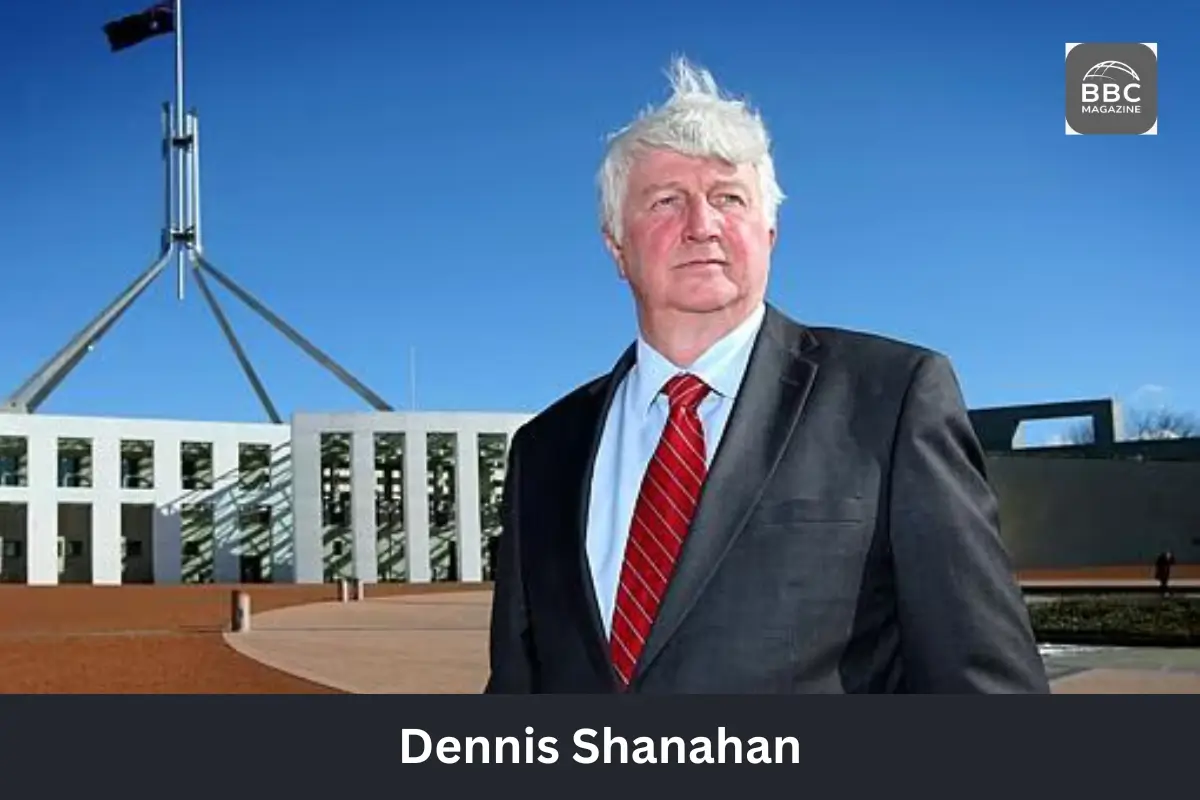
For more than half a century, Dennis Shanahan has been a constant presence in Australian political journalism. His career has unfolded alongside some of the most significant moments in modern Australian political history, from leadership stability in the late twentieth century to the rapid churn of leaders, minority governments and shifting voter loyalties in the twenty-first. As a senior editor and commentator at The Australian, and as a long-standing member of the Canberra press gallery, Shanahan’s work has helped explain not only what happens in federal politics, but how and why those events unfold.
This article brings together all established information about his professional journey, placing it within the broader context of Australian political reporting, media change and democratic accountability.
Beginnings in a Print-Dominated Newsroom Culture
Dennis Shanahan entered journalism in 1971, beginning his career in an era when Australian newspapers operated with rigid hierarchies and demanding production schedules. His first role was as a copy boy at Sydney’s Daily Mirror, a position that placed him at the operational heart of the newsroom. The job involved moving copy between reporters and editors, assisting with production tasks, and learning the rhythm of daily deadlines.
At the time, this form of apprenticeship was common. Journalists learned by observation and repetition, absorbing the practical rules of accuracy, clarity and speed. For Shanahan, these early years instilled a discipline that would later become essential in political reporting, where errors can carry significant consequences and deadlines are unforgiving.
Alongside newsroom work, Shanahan pursued higher education, completing a Bachelor of Arts before undertaking postgraduate study overseas. He later earned a Master’s degree in Journalism from Columbia University in New York, one of the world’s most respected journalism schools. That experience broadened his exposure to international reporting standards and reinforced the importance of context, ethics and analytical clarity in political journalism.
Reporting State Politics and Learning Parliamentary Mechanics
Before moving to federal politics, Shanahan worked in state political reporting, including coverage of New South Wales politics. State parliaments often provide journalists with their first sustained exposure to legislative processes, committee systems and party factionalism.
Covering NSW politics required attention to detail and a strong grasp of parliamentary procedure. Reporters needed to understand how legislation moved through the chamber, how cabinet decisions were reached, and how political compromises were negotiated behind closed doors. This period of Shanahan’s career sharpened his ability to follow complex political processes and identify the underlying forces shaping policy outcomes.
The experience also reinforced a core reality of political journalism: politics rarely conforms to neat narratives. Decisions are shaped by internal party dynamics, public pressure, institutional constraints and timing. These lessons would later inform his approach to federal political analysis.
Transition to Canberra and Entry into National Politics
In 1988, Shanahan moved to Canberra and joined The Australian, marking the start of his long association with the Federal Parliamentary Press Gallery. The press gallery is central to Australian political reporting, providing journalists with direct access to parliament, ministers, opposition figures and senior advisers.
Membership of the gallery carries both privilege and responsibility. Journalists operate under intense scrutiny, balancing the need for access with the obligation to report independently. Over time, Shanahan established himself as a reliable and informed observer of federal politics, leading to increasing editorial responsibility within the organisation.
Canberra Bureau Chief: Leadership in Political Coverage
One of Shanahan’s most significant roles at The Australian was as Canberra Bureau Chief. In this position, he directed the paper’s federal political coverage, overseeing reporters and coordinating coverage of parliamentary sittings, elections, leadership changes and national policy debates.
The bureau chief role involves constant judgement calls: which stories deserve prominence, how political developments should be framed, and how to deploy reporting resources during fast-moving events. It also requires an understanding of political cycles, from routine sitting weeks to moments of crisis or instability.
Shanahan’s tenure as bureau chief coincided with periods of significant political change, including leadership contests, policy reform agendas and evolving voter behaviour. His role placed him at the centre of national political reporting during these shifts.
Political Editor: Interpreting Power and Strategy
Shanahan later became Political Editor at The Australian, a role that blends senior reporting with interpretation and analysis. Political editors are expected to explain not only what has happened, but why it has occurred and what it may lead to.
During this phase of his career, Shanahan became widely known for analysing leadership stability, internal party dynamics and election strategy. His commentary often focused on structural realities: parliamentary numbers, party rules, electoral incentives and institutional constraints.
Rather than concentrating solely on personalities, his analysis typically placed individual leaders within broader systems of power. This approach reflected a belief that political outcomes are shaped as much by institutions and incentives as by personal ambition.
National Editor: Shaping Broader Political Narratives
Shanahan later held the position of National Editor, extending his influence beyond day-to-day political reporting into broader national affairs. While still closely connected to politics, this role involved shaping coverage of issues that intersect with government decision-making, including economic management, social policy and national identity debates.
The National Editor role reflects senior editorial trust. It positions the holder as a guiding figure in determining how national issues are presented and contextualised for readers. For Shanahan, it represented the culmination of decades of political reporting experience.
Elections, Budgets and Prime Ministers Covered
Over the course of his career, Dennis Shanahan has reported on around ten federal elections, more than thirty federal budgets, and the leadership of nine Australian prime ministers. These include leaders from both major parties across multiple political eras.
Covering elections repeatedly allows journalists to identify patterns in campaigning, voter behaviour and party strategy. Shanahan’s reporting across successive election cycles tracked shifts in political messaging, the growing influence of marginal seats, and the impact of leadership perception on electoral outcomes.
Budget coverage requires a different skill set. Budgets translate political priorities into financial commitments, often revealing tensions between policy ambition and fiscal reality. Shanahan’s long exposure to budget cycles allowed him to interpret economic policy within its political context, explaining trade-offs and consequences.
Minority Governments and Political Instability
Shanahan’s career also spans periods of minority government and parliamentary instability, when traditional assumptions about governance were challenged. These periods demanded careful reporting on negotiations, crossbench influence and constitutional norms.
During times of leadership churn, journalists must assess not only who holds office, but how authority is exercised and how long governments are likely to endure. Shanahan’s analysis during such periods drew on institutional knowledge accumulated over decades, allowing him to place short-term turbulence within a longer historical frame.
International Reporting and September 11
Although primarily focused on Australian politics, Shanahan has also reported on international events that shaped domestic policy debates. One of the most significant moments came in 2001, when he was in Washington DC during the September 11 terrorist attacks.
Reporting during this period required rapid assessment of global developments and their implications for Australian security policy, foreign relations and domestic politics. The experience underscored the interconnected nature of international events and national decision-making, reinforcing the importance of global awareness in political journalism.
Style, Method and Analytical Approach
Shanahan’s reporting style is commonly associated with contextual analysis rather than dramatic presentation. His work often examines how decisions are made within political institutions, how party structures influence outcomes, and how electoral incentives shape policy choices.
This method reflects the realities of press gallery journalism, where credibility is built through consistency and accuracy. While political commentary inevitably attracts debate, Shanahan’s career has been characterised by sustained engagement rather than attention-seeking controversy.
Prediction, Criticism and Accountability
Political journalism involves judgement as well as reporting, and Shanahan has faced criticism at various points in his career. One widely discussed episode followed the 2007 federal election, when his assessment of the likely outcome proved incorrect.
Such moments highlight the difficulty of political forecasting, particularly in volatile or closely contested elections. Shanahan has also been involved in public disputes around media accountability, including criticism from broadcast programs and formal complaints discussed in parliamentary committee material.
These episodes form part of the broader ecosystem of political journalism, where analysis is continuously tested against events and subject to scrutiny from peers, politicians and the public.
Broadcast Commentary and Explaining Canberra
Beyond print journalism, Shanahan has played a significant role in radio commentary, particularly through regular appearances on 2GB. These segments focus on explaining developments in Canberra, leadership dynamics and upcoming political challenges.
Radio commentary demands clarity and brevity, translating complex political processes into language accessible to a general audience. Through this work, Shanahan expanded his reach beyond newspaper readership and reinforced his role as a political explainer.
Teaching and Mentorship in Journalism
In addition to reporting and commentary, Shanahan has contributed to journalism education, including teaching roles at Charles Sturt University. Teaching journalism involves passing on practical skills, ethical standards and institutional understanding to students entering the profession.
This aspect of his career reflects a broader commitment to journalism as a public institution. It also highlights the transfer of knowledge from experienced reporters to new generations working in a rapidly changing media environment.
Recognition and Academic Acknowledgment
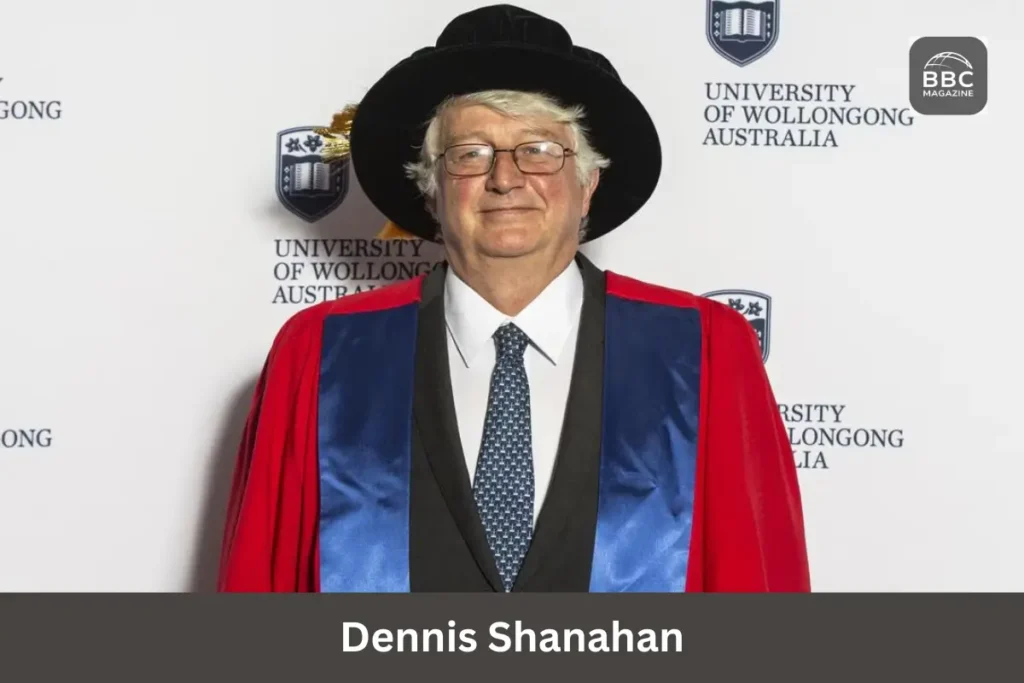
In 2019, Dennis Shanahan was awarded an Honorary Doctor of Letters by the University of Wollongong. The award recognised his contribution to Australian journalism and political discourse over an extended period.
Academic recognition of journalists is relatively rare and reflects sustained influence rather than short-term prominence. In Shanahan’s case, it acknowledged his role in shaping public understanding of politics through long-term reporting and editorial leadership.
Adapting to Digital Media and Industry Change
Shanahan’s career spans a transformation in Australian media, from print-only newspapers to digital publishing and multi-platform commentary. Adapting to these changes required shifts in newsroom workflow, audience engagement and publishing priorities.
Despite these changes, the Canberra press gallery has remained central to political accountability. Shanahan’s continued presence within this environment demonstrates adaptability and reinforces the value of institutional memory in political reporting.
Influence on Australian Political Journalism
Dennis Shanahan’s influence lies in longevity, editorial authority and accumulated knowledge. Over decades, his reporting and analysis have helped shape how Australian politics is explained and understood.
Rather than focusing on personal prominence, his career reflects an approach grounded in understanding power, process and consequence. In a media environment increasingly driven by speed and fragmentation, his work represents continuity and depth.
Conclusion
Dennis Shanahan’s professional journey spans more than fifty years of Australian political journalism. From early newsroom work at the Daily Mirror to senior editorial leadership at The Australian, from state politics to the federal press gallery, from election coverage to broadcast analysis, his career has remained focused on explaining how politics operates and why it matters.
His contribution lies in sustained observation, editorial responsibility and institutional understanding. As Australian politics continues to evolve, Dennis Shanahan remains one of the defining figures in the nation’s political media landscape.
FAQs
Who is Dennis Shanahan?
Dennis Shanahan is an Australian political journalist and senior editor known for his long career covering federal politics in Canberra, particularly at The Australian. He has held senior roles including Canberra Bureau Chief, Political Editor and National Editor, reporting on multiple federal elections, budgets and prime ministers over decades. (Based on standard biographical coverage — his career spans more than five decades in Australian political journalism.)
What is Brendan Shanahan doing now?
Brendan Shanahan is no longer the president of the Toronto Maple Leafs; the club and its parent company Maple Leaf Sports & Entertainment (MLSE) chose not to renew his contract after an 11-year tenure. He led the club through nine straight playoff seasons but never advanced past the second round before departing in May 2025. He has since been linked to potential leadership roles with other NHL teams, including the New York Islanders, where he may take on an executive position.
Why did Sportsnet get rid of Jeff Marek?
Long-time NHL analyst Jeff Marek was let go by Sportsnet in July 2024 after being with the network for over 13 years. Reports indicate the dismissal was linked to him allegedly sharing insider information about NHL draft picks with a friend ahead of their official announcement, which breached his contract obligations with the broadcaster. Marek has since moved on to a new show, The Sheet, with The Nation Network and Daily Faceoff and remains in good standing with the NHL.
Who owns 25% of MLSE?
Maple Leaf Sports & Entertainment Ltd. (MLSE) is a major Canadian sports and entertainment company. Its ownership breakdown includes a 25% stake held by Kilmer Sports, the company behind Canadian businessman Larry Tanenbaum, who is also a senior figure and board member within MLSE. The remaining ownership is controlled by a consortium including Rogers Communications and Bell (initially at 75% combined, though adjustments have occurred as share purchases change).
Are Mitch Marner and Auston Matthews still friends?
There’s no credible reporting confirming a rift between Mitch Marner and Auston Matthews. What is clear from recent analysis is that Marner was traded from the Maple Leafs (to the Vegas Golden Knights) and the team is entering a new era without him; this shift naturally changes team dynamics and media focus. Observers have not reported evidence of personal conflict between the two players, and discussions about “friendship” are largely speculative in public sources.
Where did Cassie Campbell go?
Cassie Campbell-Pascall retired from playing hockey in 2006 and became a pioneer in broadcasting. She worked as a rinkside reporter and analyst for networks including Hockey Night in Canada and Rogers Sportsnet. In late 2023, she stepped away from broadcasting to take on a special advisor role with the Professional Women’s Hockey League (PWHL), where she contributes to league development and supports women’s hockey initiatives. She also continues to be involved in hockey commentary, advocacy, leadership and community activities.
Did the Leafs fire Brendan Shanahan?
The Toronto Maple Leafs did not “fire” Brendan Shanahan mid-season, but they opted not to renew his contract as team president after the 2024–25 season. This means he left the role when the organisation chose a new direction and leadership approach rather than extending his existing contract.
Who leads NHL Player Safety?
The NHL Department of Player Safety, which reviews on-ice disciplinary matters, is currently led by George Parros as Senior Vice President of Player Safety, having taken over the role in 2017. Before him, Stéphane Quintal led the department when it was newly formed, following Brendan Shanahan’s tenure in charge during its early years.