





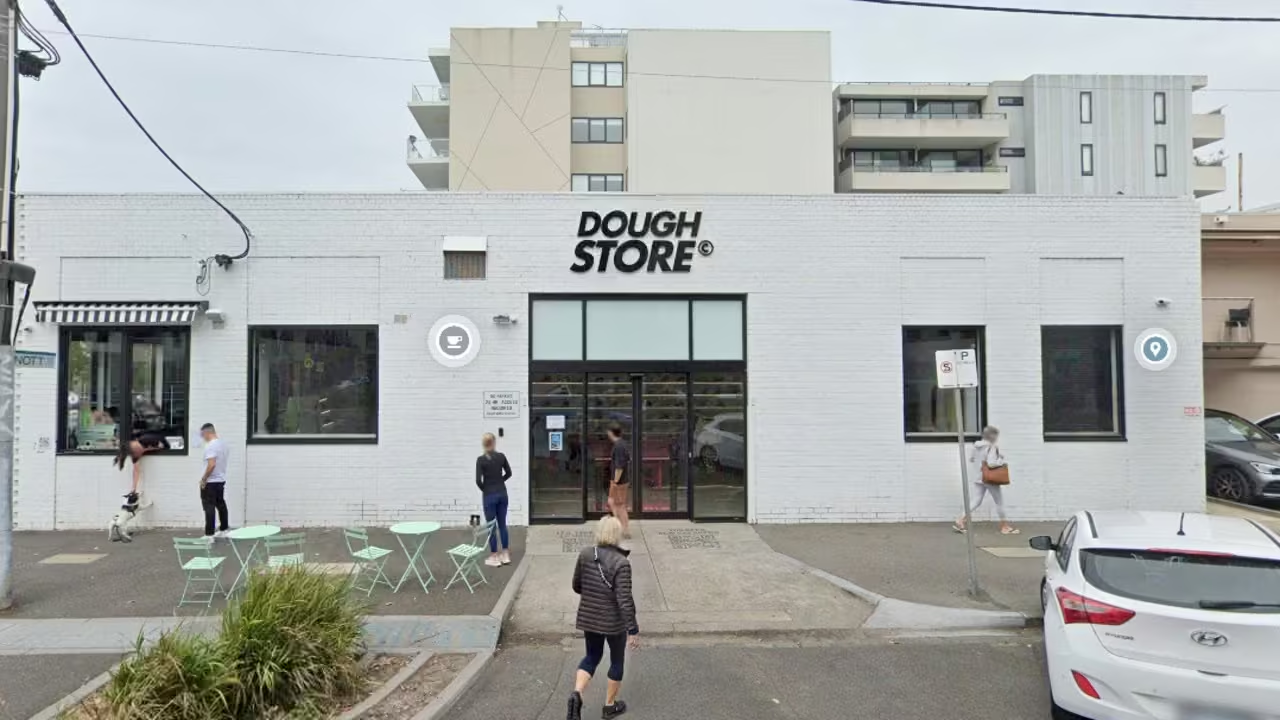
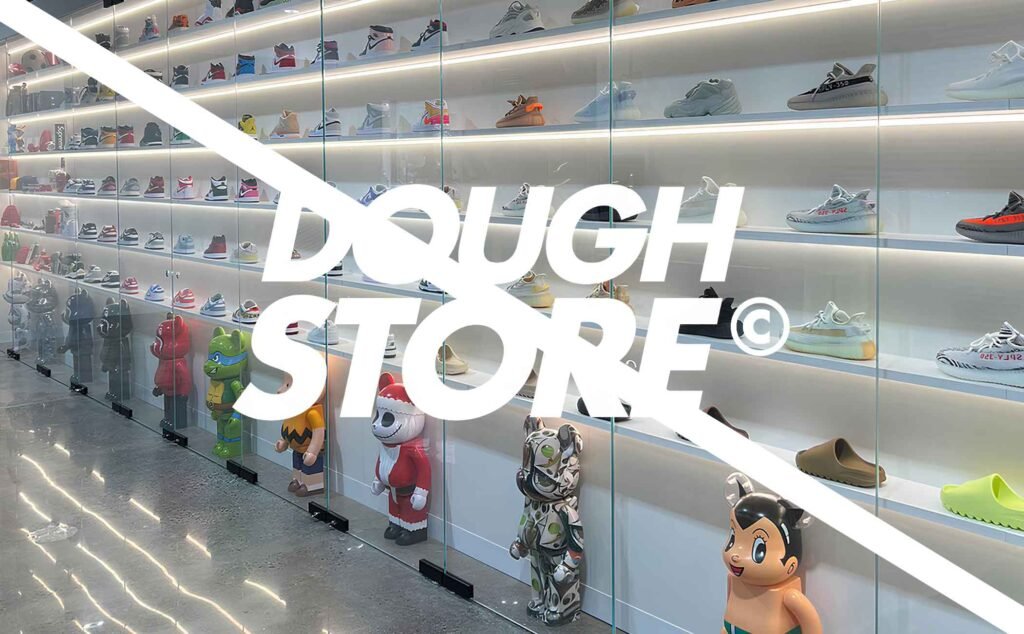
The Dough Store, which subsequently changed its name to DS Sneakers, used to advertise itself as Australia’s premier source for upscale streetwear. The company seemed slick, dependable, and professional with its contemporary storefronts in Port Melbourne and Broadbeach and a social media presence full of Jordans, Yeezys, Nike Dunks, and exclusive releases. Customers felt comfortable spending hundreds or even thousands of dollars on uncommon clothing and limited-edition footwear for years because of its branding, influencer partnerships, and store presence.
But underneath its shiny stores and well-curated online persona, the company was on the verge of a catastrophic demise. Customers complained about lost goods, delayed reimbursements, inconsistent communication, and, finally, unexpected shop closures that caught everyone off surprise as the number of complaints increased in 2024 and 2025. By the beginning of 2025, both Dough Store stores had abruptly closed, leaving scores of customers in Australia devastated and incensed.
A Store That Appeared Reputable and Established
The Dough Store took advantage of the national craze for sneakers when it initially started to gain popularity. In Australia, sneaker culture had taken over, and both casual shoppers and collectors wanted to get their hands on the newest Nike and Yeezy styles. By positioning itself as a boutique that sold goods that other retailers found difficult to find, The Dough Store capitalized on this desire.
Customers felt linked to a genuine, operational company because of its Instagram account, which featured walls piled high with brand-new shoes, immaculate shop interiors, and behind-the-scenes photos. Dough Store sales were highlighted by influencers, adding credibility. Many buyers thought they were buying from a reputable and well-established shop because of the well-lit storefronts in Melbourne and the Gold Coast.
However, as demand increased, so did the gaps in the system.
Early Warning Signs: Long Waits, Excuses, and Delays
Early in 2024, the first warning indicators appeared in late 2023. Consumers started to voice their displeasure with abnormally lengthy wait times for items that were meant to arrive promptly. Tracking numbers that never activated were reported by a few. Others were frequently informed that the shoes were “awaiting shipment,” “being sourced,” or “delayed by suppliers.”
At first, these arguments seemed reasonable, particularly considering how often delays occur in the footwear industry. However, the volume of complaints quickly became too much to ignore.
Weeks passed with no response to emails. There were contradictory support messages. Email responses and Instagram responses were inconsistent. The tracking data was never updated. What had seemed to be discrete fulfillment problems was turning into a glaring example of systemic failure.
The Sneakers That Cost $785 But Never Came
Steven West, a Victorian client, provided one of the most spectacular instances, and his narrative came to represent the collapse as a whole. He eagerly awaited his order after purchasing a pair of Nike shoes from the Dough Store for $785. Weeks went by. Months after. Emails were sent often, but nothing came.
The business eventually notified him that his sneakers were no longer in stock. They provided shop credit rather than a refund. Mr. West utilized the credit to purchase a sweatshirt and another pair of shoes because he thought the firm was still operating. Again, nothing showed up.
He resorted to social media, messaging on Facebook and Instagram, but received ambiguous responses and hollow assurances. He claims that he kept getting the same response: “We’ll give you a refund.” However, that reimbursement never materialized.
His encounter brought to light the mounting annoyance of several clients who were all facing the same lack of communication, hold-ups, and unfulfilled promises.
Details of the Owner and CEO: Who Run DS Sneakers and the Dough Store?
Jay Edwards-Kloss, popularly known as Jay Kloss, ran and oversaw the Dough Store and DS Sneakers. He oversaw daily operations, stock procurement, shop administration, and internet sales activities in his capacity as the company’s owner, director, and public face.
Since about 2018, Edwards-Kloss has been engaged in the selling of sneakers and associated small enterprises. With physical locations and a carefully chosen online inventory that catered to collectors and hype-driven consumers, the Dough Store made an effort to establish itself as a high-end sneaker supplier under his direction.
Following widespread media coverage of the affair, Edwards-Kloss officially addressed the problems. He denied turning away clients and maintained that the business was still working to complete unfulfilled orders. “We have not buried our heads in the sand and we never,” he claimed, defending the company and claiming that they were making an effort to resolve the issue.
He clarified that a combination of declining consumer spending, fluctuating demand, heightened competition, and a decline in shoe resale value brought on by Nike oversupplying the market with formerly scarce items resulted in significant financial strain for the company. He claims that these circumstances made it difficult for the company to run regularly, which eventually resulted in communication breakdowns and delayed fulfillment.
According to Edwards-Kloss, the company was functioning with “skeleton staff” after the closure of the physical locations, which had a major effect on their capacity to promptly react to clients.
The Reaction to the Review: No Reactions, Lost Money, and Damaged Trust
As 2024 went on, client feedback started to point to a more serious problem. Customers reported losing hundreds or thousands of dollars on social media and review sites. Many said they had waited months without receiving any updates or seeing any indication of their purchases, and they were furious and shocked.
According to a reviewer named Jacob, he ordered something in November 2024 but never got it. He said that until he tried to raise the issue to VCAT or threatened legal action, the corporation seldom ever reacted. Even so, there would be a brief lapse in contact. He ended his evaluation with the now-famous caution, “AVOID this company.”
Orders totaling $600, $1,200, and in one instance, an incredible $4,000 were reported stolen by other customers. For almost eight months, several customers reported that their purchases were listed as “processing.” During the early phases of the collapse, a number of persons who physically visited the businesses reported that they were locked, deserted, and empty.
The Store Credit Issue That Trapped Customers
The utilization of shop credit appeared often in consumer tales. Several clients were given credit rather than refunds when the Dough Store was unable to deliver the items they had bought. Assuming that fresh supply will soon come, many accepted it.
However, they also never received the replacement products they ordered using that credit. Customers were unable to get their money back or acquire things, thus the shop credit basically became useless. This was a very annoying scenario that made them even more irate.
Unexpected Store Closures Without Prior Notice
The Dough Store abruptly closed its locations in Broadbeach and Port Melbourne in the beginning of 2025. When customers visited the venues, they discovered closed doors, darkened windows, and vacant interiors. There was no notification on social media, no note on the website, no public notice, and no explanation given to clients who were still awaiting their goods.
The company had just changed its name from Dough Store to DS Sneakers, which added to the questionable nature of the issue. Many consumers wondered whether the rebranding was part of an unsuccessful company restructuring or if it was an effort to ignore the growing negative feedback.
Whatever the cause, many were astonished and worried that their prospects of getting refunds were now almost nonexistent when the actual locations abruptly closed.
The Owner’s Justification for the Failure
When questioned by the media, Edwards-Kloss blamed a number of economic and industry-wide issues for the company’s demise. He said that consumers were no longer purchasing premium shoes at the same pace due to pressures from the expense of living. As Australians prioritized spending on necessities, demand for shoes ranging from $400 to $1,200 fell precipitously.
Additionally, he said that Nike had drastically boosted production of well-liked releases, which had caused many sneakers’ resale value to plummet. “Nike flooded the market and killed the value and desirability of majority of our stock,” he said. Because of this, the Dough Store had a lot of goods that was no longer able to be sold for a profit.
The company’s financial downfall was influenced by a number of factors, including rising competition, waning sneaker excitement, and fluctuating inventory values. Communication almost stopped after the businesses closed and the number of employees decreased.
Customer annoyance and a breakdown in communication
Customers reported a tumultuous communication climate after the closures. Responses to messages made via Facebook, Instagram, email, and the website were inconsistent. Others were informed that reimbursements were being handled, but they never came, while others got a single response followed by quiet.
Many reported receiving ambiguous responses with no specific deadlines or answers, such as “we’re working on it” or “it’s out of our control.” One of the main causes of annoyance was this lack of openness.
Victoria’s Consumer Affairs Verifies Complaints
Consumer Affairs Victoria acknowledged receiving concerns about the Dough Store and DS Sneakers as consumer complaints grew. They openly urged impacted customers to file official complaints and promised to look into the issue if needed.
Banks promoted chargeback demands for cardholders, and many started collecting emails, receipts, images, and chat logs in case legal action was required.
Concluding remarks
Australian customers should take note of the demise of DS Sneakers and the Dough Store. Once backed by actual storefronts and aggressive marketing, a brand that seemed authentic, contemporary, and reliable eventually failed to meet its consumer duties. Many Australians felt deceived by the vacant storefronts, ignored messages, and lost money.
The Dough Store’s ascent and collapse serves as a reminder of the need for more client protection, accountability, and transparency in Australia’s rapidly expanding streetwear and sneaker sector. The incident serves as a reminder that flashy branding may sometimes conceal significant underlying issues, and it is unclear how to resolve the issue for individuals who are still awaiting purchases or refunds.
FAQs
Can you buy dough from a grocery store?
Yes. Most Australian supermarkets sell ready-made dough, including pizza dough, pastry sheets, cookie dough and bread mixes. Some stores also stock fresh bakery-made dough in the refrigerated section.
Is The Back Wall legit in Australia for shoes?
The Back Wall is a known reseller platform, but as with any sneaker resale service in Australia, legitimacy depends on the individual seller and product listing. It’s important for buyers to check reviews, verify authenticity guarantees and ensure the platform offers buyer protection.
Can I store dough in the fridge?
Yes. Dough can be stored in the fridge to slow fermentation. Most dough types stay fresh for one to three days if sealed properly.
What does DS mean in sneakers?
In sneaker terminology, “DS” stands for “Deadstock.” This means the shoes are brand new, unworn and often still in their original packaging.
How long is dough good for unrefrigerated?
Dough should not be left unrefrigerated for more than a few hours. Warm temperatures can cause over-proofing and increase the risk of bacterial growth.
How do I keep dough fresh?
To keep dough fresh, store it in an airtight container or wrap it tightly in plastic wrap. Refrigeration helps slow fermentation and prevents drying.
How long until raw dough goes bad?
Raw dough kept in the fridge typically lasts one to three days, depending on ingredients. If the dough smells sour, feels sticky or has visible discolouration, it should be discarded.
How do I keep dough from drying out?
Dough dries out when exposed to air. Keeping it covered with cling wrap, a lid or a damp cloth helps maintain moisture and elasticity.