




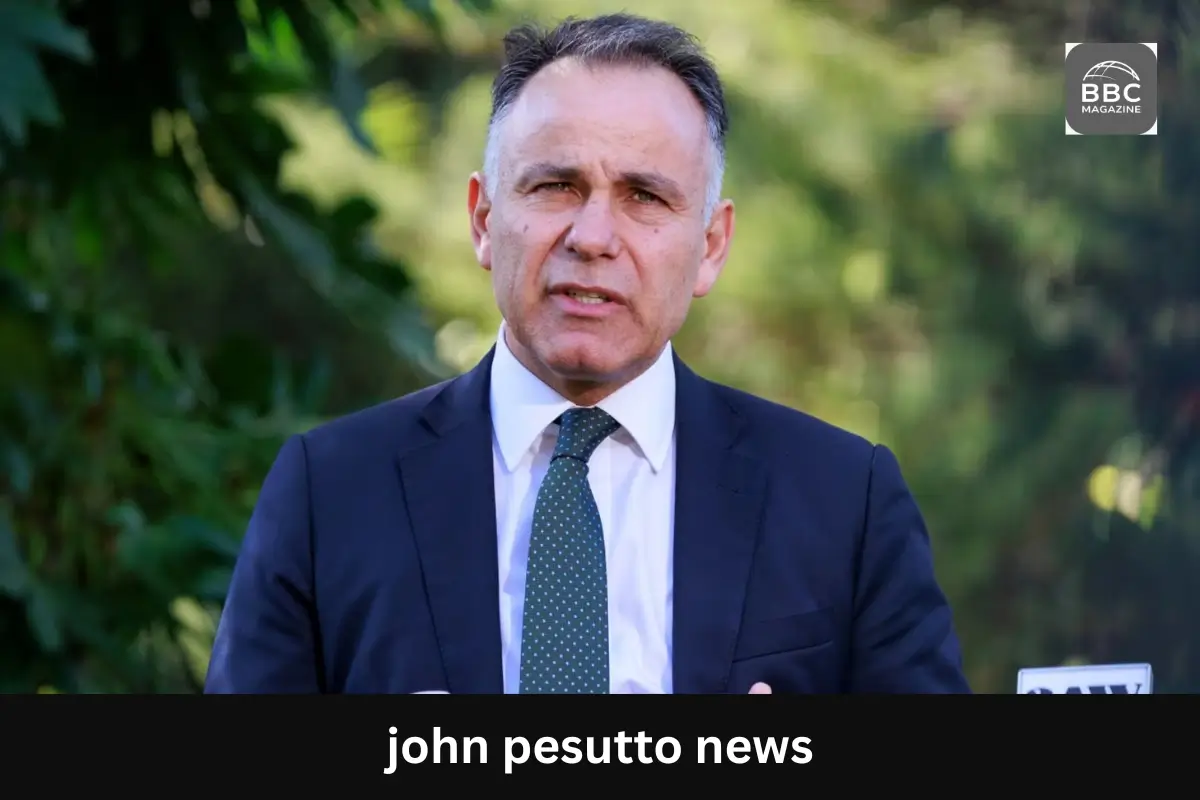
John Pesutto’s political rise and fall represents one of the most revealing episodes in recent Victorian political history. It is not simply the story of a leader undone by a legal error, nor solely the result of internal party rivalry. Instead, it is a detailed case study of how legal misjudgment, factional warfare, organisational weakness and delayed leadership combined to produce a crisis that engulfed the Victorian Liberal Party and continues to shape its future.
Between 2022 and 2025, a narrow leadership victory gave way to a defamation ruling, a record-breaking legal costs order, a leadership spill, a looming bankruptcy, and an extraordinary party loan approved amid warnings of internal war. Even after Pesutto avoided bankruptcy and retained his parliamentary seat, the episode left behind a fractured, demoralised and struggling to convince voters that it remains capable of governing.
This is the complete, verified account of how it unfolded and why it matters.
A Leadership Won Without Security
John Pesutto returned to the Victorian Parliament in 2022 after reclaiming the seat of Hawthorn, a seat he had lost in the 2018 election during a broader Liberal collapse. His return was marked by a significant swing, reinforcing the view held by many moderates that socially liberal, institution-focused candidates could still succeed in Melbourne’s inner east, an area where the party had been steadily losing ground.
Later that year, Pesutto contested the leadership of the Victorian Liberal Party. The result was decisive but fragile. He defeated Brad Battin by a single vote, winning 17–16. That margin revealed a party split almost evenly between competing ideological and organisational camps.
From the outset, Pesutto lacked a commanding mandate. His authority depended on maintaining a delicate internal balance, and any misstep carried the risk of rebellion. The party he inherited was already marked by long-running disputes over culture, discipline and direction, disputes that had intensified following repeated electoral losses and the rise of real independents in once-safe Liberal territory.
The Rally and the Escalation of Crisis
The defining moment of Pesutto’s leadership came in March 2023. Moira Deeming, a Liberal member of Victoria’s upper house, attended a “Let Women Speak” rally held on the steps of Parliament House. The rally focused on opposition to aspects of transgender policy and featured international speakers.
During the event, members of the National Socialist Network appeared nearby and performed Nazi salutes. Their presence transformed what might otherwise have remained a controversial political debate into a reputational crisis for the Liberal Party.
As leader, Pesutto responded publicly, declaring that Deeming’s position in the party was untenable. His intention was to distance the party from extremism. However, his subsequent statements went beyond condemning the rally or the extremist infiltration. They implied that Deeming herself sympathised with or was aligned with neo-Nazi ideology.
That implication would prove decisive.
The Federal Court Defamation Case
Moira Deeming commenced defamation proceedings against Pesutto in the Federal Court of Australia, Victoria Registry. The court was asked to determine whether Pesutto’s public statements conveyed defamatory imputations and whether those imputations were false.
After extensive hearings, the Federal Court found that Pesutto had defamed Deeming on multiple occasions. The court held that an ordinary reader or viewer would understand his statements as suggesting that Deeming sympathised with neo-Nazis. The court rejected defences including qualified privilege and political communication, finding that the statements exceeded what was reasonable or necessary in the circumstances.
The ruling underscored a critical legal principle. Leadership status does not reduce legal risk. In fact, it increases it. Statements made by a party leader carry greater authority and reach, and the law imposes corresponding responsibility.
The court awarded damages of approximately $300,000, recognising the reputational harm suffered. However, the most severe consequences were yet to come.
Why the Legal Costs Became Catastrophic
Following the defamation ruling, the court turned to the question of costs. In May 2025, the Federal Court assessed Deeming’s legal costs on a lump-sum basis at approximately $2.308 million, inclusive of GST.
The costs determination was separate from damages and dwarfed the compensation award. The scale was extraordinary. Legal costs exceeded damages by nearly eight times, a ratio that immediately placed Pesutto under extreme financial pressure.
The costs were assessed through a lump-sum taxation process, reflecting the complexity and duration of the proceedings. This mechanism, while lawful, left little room for negotiation or delay.
From the outset of the case, both Pesutto and the Victorian Liberal Party had maintained that he would be personally liable. The party declined to indemnify him, despite the statements having been made in his capacity as opposition leader. This decision broke with political precedent and later attracted intense criticism, particularly after Pesutto lost the leadership and no longer held institutional power.
Leadership Spill and the Withdrawal of Support
In December 2024, before the costs judgment was finalised, the Victorian Liberal Party moved to a snap leadership vote. Pesutto was removed as leader, and Brad Battin was elected in his place. At the same time, Deeming was readmitted to the party room.
The shift in power was immediate and decisive. The conservative wing consolidated control, while moderates lost their most prominent figure. Pesutto returned to the backbench with no shadow portfolio and no institutional backing in his legal battle.
The party’s posture shifted from defence to distance. What had begun as a leadership crisis was now treated as an individual liability.
Bankruptcy Notice and Constitutional Risk
By mid-2025, Deeming’s legal team issued a bankruptcy notice against Pesutto after the costs judgment remained unpaid. The implications were profound.
Under Victorian law, a bankrupt MP is disqualified from parliament, automatically vacating their seat. In Pesutto’s case, this would have triggered a by-election in Hawthorn.
The prospect of a by-election alarmed the party. Hawthorn, while historically safe, had been lost as recently as 2018 and lay within the demographic territory where Liberal support had been eroding. A by-election defeat would have reinforced perceptions of dysfunction and further destabilised the opposition.
The crisis was no longer theoretical. It was imminent.
Threats of Third-Party Cost Recovery
Internal anxiety intensified when correspondence from Deeming’s legal team indicated that, if Pesutto could not pay, third parties might be pursued for cost recovery. The correspondence named former Liberal premiers and sitting MPs who had publicly supported Pesutto.
This development changed the internal calculus. MPs who had previously viewed the dispute as abstract suddenly faced potential personal exposure. Trust within the party room deteriorated rapidly, and factional hostility hardened.
Organisational Panic and the Administrative Committee
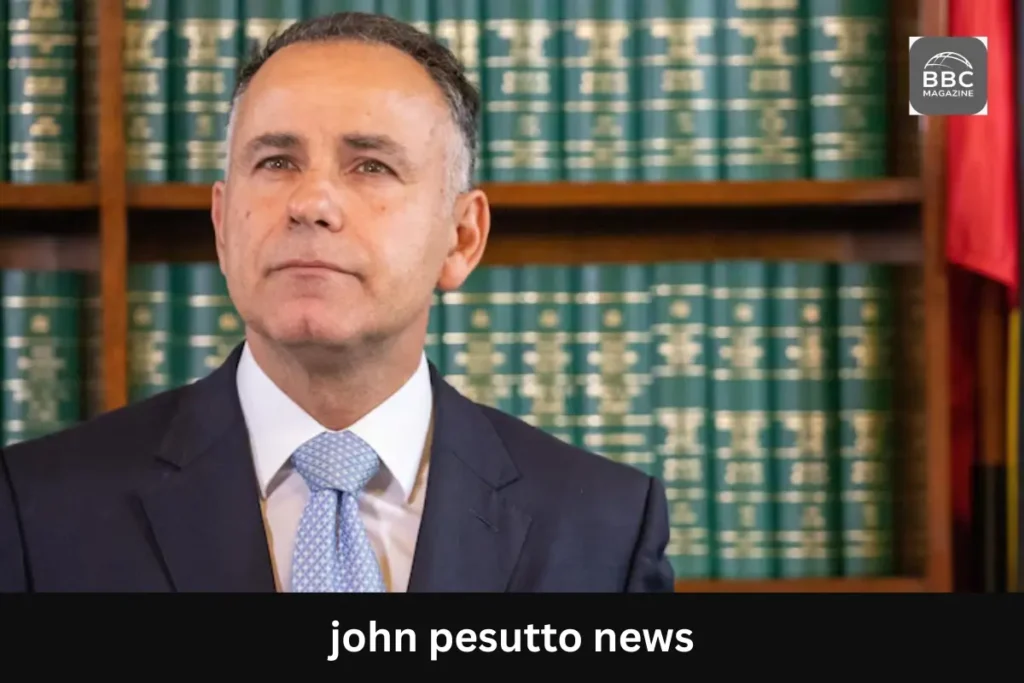
As the bankruptcy deadline approached, the party’s administrative committee convened to consider an emergency loan. The process itself exposed deep governance failures.
Phones were confiscated before a secret ballot. Several committee members later stated they had learned critical details of the proposal through media reports rather than formal briefings. Some members who opposed the loan said they were kept out of early discussions, while support was canvassed privately.
The party president canvassed views amid intense pressure. Senior MPs warned that failure to approve the loan would trigger “all-out war” inside the party. Others described the looming conflict in similarly stark terms.
The organisational wing, already strained by declining membership and limited campaign funds, was deeply divided over whether party resources should be used to resolve an internal legal dispute rather than prepare for elections.
Approval of the Loan and Moral Backlash
The administrative committee ultimately approved a loan of approximately $1.5 to $1.55 million. The loan was reportedly issued at a commercial interest rate and secured in part against Pesutto’s superannuation.
Supporters argued the decision was pragmatic. Bankruptcy would have removed Pesutto from parliament and risked losing Hawthorn. Opponents argued the loan contradicted Liberal principles, undermined the Federal Court’s authority, and diverted scarce resources from campaigning.
Moira Deeming publicly condemned the loan, arguing it represented institutional endorsement of harm and a rebuke of the court’s findings. Claims that the party would earn interest from the arrangement further inflamed tensions and reinforced perceptions of an “old boys’ club”.
Gender politics became unavoidable. Critics warned the episode reinforced narratives of institutional protection of power at the expense of women, a perception particularly damaging in metropolitan Victoria.
Legal Challenge and Judicial Rebuke
The loan itself became the subject of a legal challenge. An application was brought seeking to block or question the arrangement.
The challenge failed. A judge criticised the application as procedurally flawed, noting that the funds had already been transferred and describing the bid as poorly constructed. The ruling allowed the loan to stand.
Rather than closing the chapter, the failed challenge reinforced public perceptions of disorder and poor governance.
Payment Made and Bankruptcy Avoided
With the assistance of the party loan and additional fundraising, Pesutto paid the court-ordered costs and avoided bankruptcy. The immediate constitutional threat receded, and Hawthorn was retained.
However, the resolution came too late to restore trust. Internal resentment deepened. Some MPs argued the party should have intervened earlier. Others believed it should not have intervened at all.
Pesutto remained in parliament but politically marginalised, neither rehabilitated nor expelled, occupying an uneasy position on the backbench.
IBAC Referral and Clarification
As part of the broader dispute, elements of correspondence and settlement discussions were referred to Victoria’s Independent Broad-based Anti-corruption Commission. It is important to note that referrals do not imply wrongdoing, and IBAC does not confirm or deny investigations as a matter of practice.
No findings of misconduct have been publicly established. Nevertheless, the referral prolonged scrutiny and ensured the saga continued to overshadow the party’s efforts to move forward.
Electoral Context and National Implications
The Pesutto saga unfolded against a backdrop of broader Liberal decline. In Victoria, teal independents consolidated their hold on former blue-ribbon seats. Federally, the party struggled to connect with metropolitan voters, with leadership rhetoric increasingly at odds with centrist electorates.
Pesutto’s removal was interpreted by many as part of a national pattern in which socially moderate Liberal figures were displaced while organisational power shifted further right. The gap between party membership and the electorate widened.
A Precedent That Will Shape Future Leadership
Perhaps the most enduring consequence of the episode lies in the precedent it set. Allowing a leader to bear personal legal liability for statements made on behalf of the party weakened the authority of leadership itself. Future leaders will inevitably weigh the personal risk of decisive public intervention against the likelihood of institutional support.
This chilling effect may shape behaviour long after the case fades from headlines.
Conclusion
John Pesutto’s rise and fall was not the product of a single mistake. It was the culmination of delayed decisions, legal misjudgment, factional conflict and organisational failure inside a party already struggling to define its purpose.
Saved from bankruptcy but politically sidelined, Pesutto stands as a symbol of a deeper crisis within the Victorian Liberal Party. The legal battles have ended, but the structural problems they exposed remain unresolved.
Whether the party learns from this episode will determine not only Pesutto’s legacy, but its own capacity to rebuild authority, credibility and trust with Victorian voters.
FAQs
What happened to Moira Deeming?
Moira Deeming was expelled from the Victorian Liberal Party after a dispute with then leader John Pesutto but was later readmitted following a successful Federal Court defamation case against him.
Who is the Liberal opposition in Victoria?
The Liberal opposition in Victoria is the Liberal Party of Australia (Victorian Division), which sits opposite the Labor government in the Victorian Parliament.
What religion is Brad Battin?
Brad Battin has publicly identified as Catholic in media reporting, though religion is not a central feature of his political platform or public role.
Who is the new Liberal leader in Victoria?
The current Liberal leader in Victoria is Brad Battin, who replaced John Pesutto following a leadership spill in December 2024.
Who is the new Liberal leader?
In the Victorian context, the new Liberal leader is Brad Battin. Leadership varies by state and federal level in Australia.
Is the Liberal Party in Australia right-wing?
The Liberal Party in Australia is generally described as centre-right, supporting free markets, private enterprise and conservative economic policies, with a broad internal ideological range.
Who is the main opposition in Canada?
The main opposition in Canada is the Conservative Party of Canada, which sits opposite the governing Liberal Party at the federal level.
What is a leadership spill?
A leadership spill is a formal process within a political party to declare a leadership position vacant and hold a vote, often triggered by internal dissatisfaction or factional conflict.