

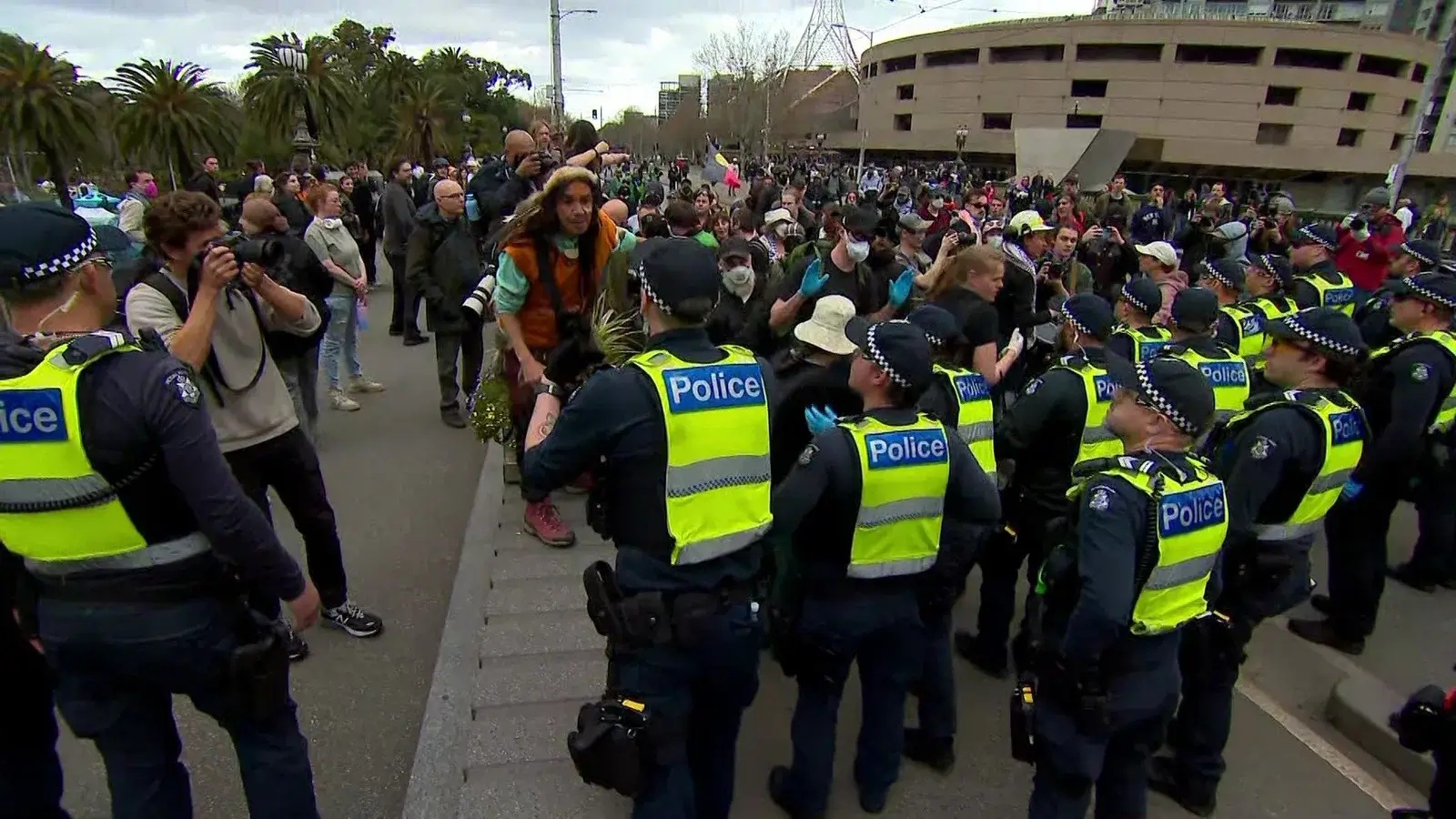
Melbourne has entered a turbulent new era where protests have become a defining part of city life. Demonstrations connected to Gaza, immigration, anti-fascism, far-right nationalism, cost-of-living pressures and general political anger now occur so frequently that residents regularly search terms like melbourne protest today, melbourne protest live, and is there a protest in Melbourne today. Increasingly, the answer is yes.
What was once a city known for energised but largely peaceful activism has transformed into an environment marked by high-tension confrontations, extremist clashes, aggressive police responses and waves of public disruption that ripple through the CBD almost every weekend. Melbourne is now being described by experts, police and commentators as Australia’s protest capital, with demonstrations happening so often that the question is no longer if they will occur, but where and how violent they might become.
A City Living in a Constant Cycle of Protests
Melbourne authorities prepare for protest activity practically every week. Victoria Police now publish special notices ahead of large gatherings, declaring parts of the CBD a “designated area” where officers have expanded powers to stop and search. One such notice identified boundaries that included Spring Street, La Trobe Street, Flinders Street and Victoria Street. These are the same areas that frequently appear in searches for melbourne cbd protest today and melbourne city protest today, because these zones have become the regular meeting points for rallies of every kind.
Some weekends bring as many as six separate demonstrations occurring at the same time. These include pro-Palestine marches, far-left counter-rallies, far-right gatherings, anti-immigration protests, cost-of-living rallies, industrial actions, climate groups and rapid “flash protests” announced with less than an hour’s notice. The City of Melbourne often warns residents about tram diversions, heavy traffic, disruptions to businesses and the likelihood of police barriers blocking major intersections.
This constant cycle of protest activity is one reason why terms like melbourne protest this weekend and melbourne protest tomorrow have surged across search trends. For many residents, the first step before entering the city is checking whether demonstrations are planned.
13 September: The Turning Point for Large-Scale Confrontations
One of the events that significantly shaped the current environment occurred on 13 September, when four rival groups scheduled protests across the CBD on the same day. Anti-immigration activists, far-left anti-fascist groups, pro-Palestine blocs and smaller radical networks converged in central Melbourne, forcing police to deploy large teams across multiple locations.
The event highlighted the growing challenge of managing crowds with conflicting ideologies that often overlap geographically. It also reinforced the reality that Melbourne no longer experiences single-issue marches; instead, it now sees layered political demonstrations that collide both physically and ideologically.
The Growth of Melbourne’s Pro-Palestine Protest Movement
Pro-Palestine activism has become one of Melbourne’s largest and most consistent protest movements. These rallies draw thousands and now appear weekly or fortnightly. Many begin at the State Library of Victoria, move through Swanston Street, and conclude outside Parliament House or Flinders Street Station.
One of the most significant actions occurred on 1 September when activists blockaded Webb Dock at Port Melbourne. The blockade targeted ships linked to Israel and led to hours of disruption at one of the city’s major shipping terminals. This event alone elevated search terms such as melbourne palestine protest today, melbourne gaza protest, and pro palestine melbourne protest.
These gatherings often overlap with other demonstrations, particularly anti-immigration and cost-of-living rallies, increasing the risk of confrontations between groups with opposing messages.
Far-Left Activism and the October 19 Confrontation
While extremist activity is often associated with the far-right, it was far-left groups that shocked authorities during the 19 October protest. Police had expected far-right involvement but instead encountered far-left activists dressed in black, wearing face coverings, goggles and protective gear. Their preparation suggested they fully expected pepper spray and physical confrontation.
During the event, far-left protesters hurled railway ballast, bottles filled with glass shards, eggs, fruit and improvised projectiles directly at police. Some protesters lit rubbish bins and even effigies of police on fire. These actions prompted a forceful response from Victoria Police Commander Wayne Cheesman, who displayed a box of ballast seized during the protest and said Melbourne had “had a gutful” of violence. He stated that those who initiated the clashes were “issue-motivated groups on the left,” contradicting claims that they were simply responding to police aggression.
Far-Right Extremism Continues to Exploit Public Unrest
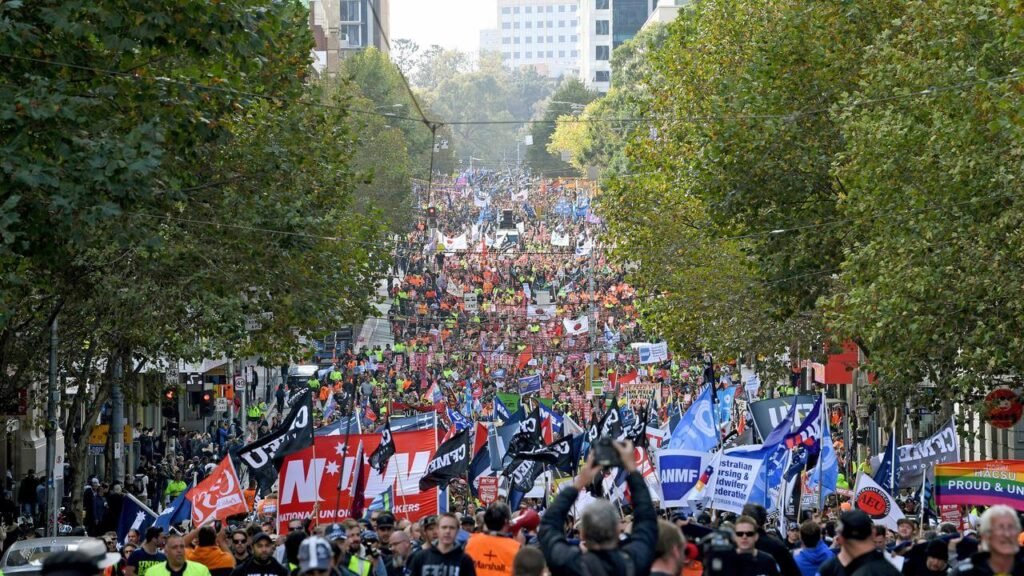
Although the far-left dominated headlines during the October clashes, far-right groups continue to be highly active in Melbourne’s protest environment. The National Socialist Network, led by Thomas Sewell, has a structured recruitment strategy that attaches extremist ideology to mainstream grievances. Through movements linked to anti-immigration sentiment, anti-Islam demonstrations, anti-lockdown rallies and cost-of-living concerns, the far-right continues to expand visibility.
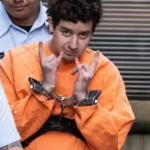
Sewell’s appearance at the March for Australia rally, where he was given a microphone to address the crowd from the steps of Parliament House, signalled a bold escalation. He was later charged with 21 offences after allegedly leading an attack on Camp Sovereignty, an Aboriginal protest site at Kings Domain. These charges include violent disorder, assault, affray and discharging a missile, and he was denied bail.
Experts warn that the far-right deliberately blends into broader political movements to minimise public resistance and avoid early detection.
Cumulative Extremism: The Dangerous Cycle Driving Today’s Violence
Macquarie University Professor Julian Droogan says Melbourne’s protest scene is now shaped by “cumulative extremism.” This term describes a process where opposing extremist groups provoke each other, causing both sides to escalate their behaviour.
In Melbourne’s case, far-right groups have increased visibility through public rallies, which in turn provokes far-left groups who believe they must prevent the rise of fascism. This belief is grounded in reflections on the 1920s and 1930s, when society failed to act early against authoritarian movements. The far-right then reacts to the presence of anti-fascist groups, creating a spiral of hostility.
International comparisons show similar patterns in the United States, Germany and France, where far-right and far-left movements feed off each other’s presence. Droogan notes that although violence is rare compared to other Western nations, the rapid acceleration in Melbourne is concerning.
Police Under Pressure and Facing Direct Violence
The growing intensity of Melbourne protests has placed enormous strain on Victoria Police. Two officers were hospitalized during the 19 October clashes. A female sergeant in her early 40s suffered a serious hand injury, and a male senior constable in his 30s sustained a deep leg laceration. Both injuries were caused by bottles filled with glass shards.
Police Association CEO Wayne Gatt condemned the violent behaviour and dismissed claims that protesters were peaceful. He questioned why protesters claiming to oppose fascism would arrive with bags of railway ballast and incendiary items. Gatt said officers should not be used as “target practice” and argued that violent groups had lost credibility.
The Stinger Grenade Incident and Growing Debate Over Police Tactics
One of the most controversial moments of recent protest activity involved the deployment of a stinger grenade. These devices emit a loud explosion, release rubber pellets, create a bright flash and may include chemical irritants depending on the model. It remains unclear which version Victoria Police used.
A protester known as Scout suffered burns to the leg, groin and wrist after the grenade detonated near them. Scout said the explosion felt like being in a war film, and they were left with ringing ears, blurred vision and intense pain. X-rays were taken to determine whether metal fragments had entered their skin.
Footage shows the grenade was underarm-thrown by a Public Order Response Team officer and struck a protester’s umbrella before landing on the ground and exploding. No audible warning was issued. A nearby photographer, who requested anonymity due to his line of work, confirmed there was no police announcement prior to the blast and said he felt debris hit his legs.
The incident has drawn comparisons to injuries overseas, where stinger grenades have caused permanent blindness, severe burns and legal disputes, particularly in France and the United States.
Clarifying Truck and CFA Protest Confusion
Online search trends show a surge in interest for terms like “melbourne truck protest today” and “cfa melbourne protest.” However, there is currently no confirmed truck protest occurring in the city, nor is there any active CFA-related protest movement. These terms often resurface due to outdated social media posts or misinformation.
Lockdown Protest Networks and Their Influence on Today’s Unrest
Many of the mobilisation networks active in Melbourne today trace back to the city’s anti-lockdown period. Channels on Telegram, encrypted chats and groups from the pandemic era have reactivated, providing a fast-moving infrastructure for organising demonstrations. Figures who previously led large anti-lockdown rallies have reappeared in movements linked to immigration, Palestine and general anti-government sentiment.
This is one reason why Melbourne protests can form quickly, grow rapidly and shift locations without warning.
Melbourne’s Protest Future: A City at a Crossroads
Melbourne now stands at a crucial point in its protest history. The city hosts frequent Gaza marches, far-left counter-rallies, far-right gatherings, anti-immigration protests, cost-of-living demonstrations and climate actions, often colliding within the CBD. Police have increasingly relied on stinger grenades, rubber bullets and pepper-ball launchers while dealing with prepared extremist groups acting with a level of coordination previously unseen in Australian protest movements.
Authorities fear that without intervention, extremist groups will continue to hijack legitimate public demonstrations. Conversely, civil rights advocates warn against heavy policing methods that may inflame tensions rather than calm them. There is growing debate about whether Melbourne needs designated safe protest zones, enhanced de-escalation strategies or more transparent policing to manage the next wave of protests.
What is clear is that Melbourne has changed. The city that once held peaceful marches is now negotiating escalating street violence, political anger and a rising atmosphere of hostility that transforms ordinary weekends into flashpoints of unrest.
Conclusion
Melbourne’s protest landscape has transformed dramatically, shaped by geopolitical conflict, ideological extremism, local grievances and a volatile cycle of cumulative extremism involving both far-left and far-right groups. The city’s CBD has become a hotspot for constant protest activity, with residents routinely preparing for disruptions linked to demonstrations that can be peaceful one moment and violent the next.
Police face increasing challenges as violent elements exploit legitimate causes, while protesters confront heavy policing measures that raise important questions about civil liberties. Melbourne now finds itself at a crossroads, forced to balance the right to protest with the need to protect public safety.
As tensions continue to escalate, the city’s future depends on how governments, police, activists and communities respond. Whether Melbourne can return to peaceful civic expression or remains caught in a cycle of escalating unrest is a question that will shape not only the city’s identity but also the direction of public protest movements across Australia.
FAQs
What upcoming protests are planned in Melbourne?
Melbourne continues to experience regular protest activity, especially on weekends. Police have issued designated-area notices for the Melbourne CBD, indicating expected demonstrations. Recent public notices have covered full-day periods, typically from morning until evening. Protests relating to Gaza, immigration, anti-fascist movements, and far-right groups are among the most common, with new rallies often announced with short notice.
What time is the protest in Melbourne today?
When Victoria Police issue a designated-area declaration, it usually covers a broad timeframe such as 8:00am to 8:00pm. If a protest is listed for today, you can expect activity throughout this period, with increased police presence and potential disruptions across the CBD.
Where is the protest in Melbourne today?
Most Melbourne protests occur within the central CBD, commonly around Spring Street, Flinders Street, La Trobe Street, Swanston Street, Parliament House and the State Library. These areas are frequently used as meeting points or marching routes, so live disruptions can occur anywhere within this zone.
Is there a Melbourne CBD protest today?
If a designated-area notice has been issued for the Melbourne CBD, it means police are preparing for protest activity today. In these cases, the CBD should be considered an active protest zone with likely delays and intermittent crowd movements.
Are there Melbourne protests this weekend?
Melbourne often hosts multiple protests on weekends, sometimes as many as four to six on the same day. These can include pro-Palestine marches, anti-immigration rallies, far-left counter-protests, far-right gatherings and smaller activist events. Weekend disruption has become common in central Melbourne.
Will there be a Melbourne protest tomorrow?
Protests are frequently scheduled back-to-back across weekends. Even if no public notice has been issued yet, Melbourne’s recent pattern suggests a strong likelihood of demonstrations tomorrow, especially around the State Library, Parliament steps or Flinders Street Station.
Are there demonstrations planned for Saturday?
Saturday remains the most active protest day in Melbourne. Police often declare the CBD a designated area on Saturdays due to the higher probability of demonstrations. Major groups also prefer Saturdays due to higher turnout.
Are there Melbourne protests on Sunday?
While Sunday protests occur less frequently than Saturday rallies, they still take place regularly, particularly for Gaza solidarity marches, anti-fascist groups and sudden flash protests. Sundays often see spill-over demonstrations from larger Saturday events.