




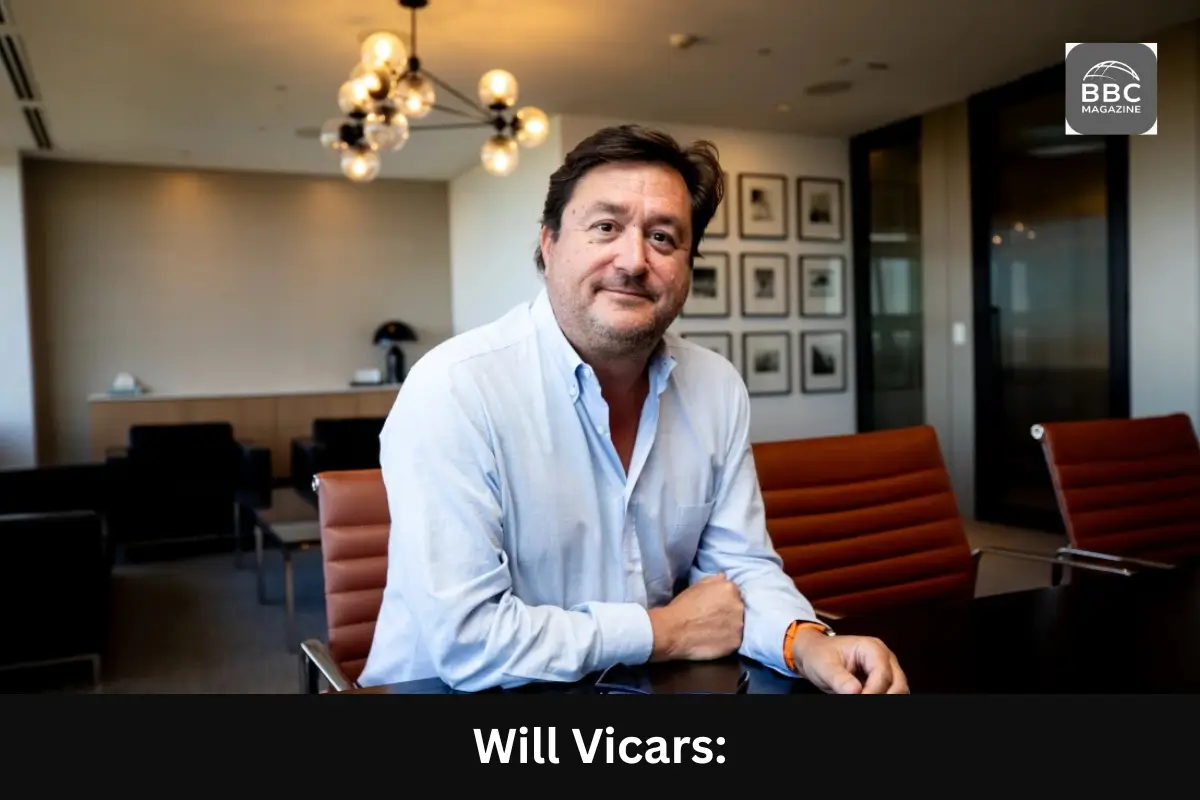
Will Vicars is one of the most recognisable yet understated figures in Australian funds management. His profile has not been shaped by interviews, public commentary or personal branding, but by long-term participation in global equity markets and sustained attention from Australia’s financial press. Over many years, Will Vicars has emerged as a central figure in discussions about conviction-based investing, concentrated portfolios and the pressures faced by active fund managers operating outside benchmark-driven strategies.
As a senior investment leader at Caledonia, Will Vicars has become closely associated with a style of investing that prioritises patience, research depth and long-term belief. His career has unfolded against a backdrop of shifting market conditions, increased scrutiny of active management and growing dominance of passive investment vehicles. This article brings together all consistently reported information about Will Vicars professional life, market role and influence, presenting a complete and coherent account of his standing within Australia’s financial landscape.
Professional Identity and Role at Caledonia
Will Vicars is widely recognised as Co-Chief Investment Officer at Caledonia, a Sydney-based global equities manager known for its focused and selective approach to investing. His role places him among the firm’s most senior decision-makers, with responsibility for shaping strategy, guiding portfolio construction and maintaining discipline across market cycles.
Caledonia operates differently from large diversified asset managers. Rather than tracking indices or maintaining broad exposure, the firm focuses on a limited number of carefully selected positions. This structure amplifies both the impact of successful decisions and the consequences of misjudgement, ensuring that leadership accountability remains high. Will Vicars position at the centre of this model has made him a recurring subject of financial analysis and commentary.
Career Progression and Long-Term Leadership
Australian financial reporting does not dwell extensively on Vicars’ early professional years, but his rise within Caledonia reflects a sustained career built on internal credibility and strategic consistency. Over time, he advanced into senior leadership and became a long-standing contributor to the firm’s investment direction.
Importantly, Will Vicars is not portrayed as a recently appointed executive or a rotating manager. Coverage consistently treats him as a durable presence within Caledonia’s leadership structure, someone whose influence has been exercised across multiple market cycles. This longevity has played a key role in shaping perceptions of both Will Vicars and the firm itself.
His career progression mirrors that of specialist fund managers whose reputations are forged gradually through decision-making under pressure rather than through public exposure.
Investment Philosophy and Conviction-Based Strategy
Although Vicars rarely outlines his views directly, his investment philosophy is evident in the way Caledonia operates and the themes highlighted in financial reporting. The firm’s strategy centres on identifying businesses with strong long-term characteristics and maintaining positions through periods of uncertainty.
This approach places Vicars firmly within the tradition of conviction investing. Rather than adjusting portfolios frequently in response to market sentiment, Caledonia under his leadership has shown a willingness to tolerate volatility in pursuit of long-term outcomes. This philosophy has been contrasted repeatedly with momentum-driven and index-aligned strategies that dominate modern markets.
Australian business commentary has often framed Vicars as an advocate for patience at a time when investment horizons have shortened and performance measurement has become increasingly immediate.
Named Market Positions and Strategic Debates
One reason Vicars remains prominent in financial coverage is the way Caledonia’s positions have intersected with major market debates. Australian business reporting has referenced the firm’s long-held positions in global companies, particularly in sectors shaped by technology, consumer platforms and digital marketplaces.
In takeover and valuation discussions, Vicars has been associated with resistance to offers viewed as inadequate, reinforcing his reputation for disciplined assessment rather than opportunistic exits. These episodes have been used by commentators to illustrate the tension between short-term market pricing and long-term valuation beliefs.
Such case studies have anchored Vicars’ profile in tangible market activity, ensuring that discussion of his career remains grounded in specific strategic decisions rather than abstract theory.
Performance Scrutiny Across Market Cycles
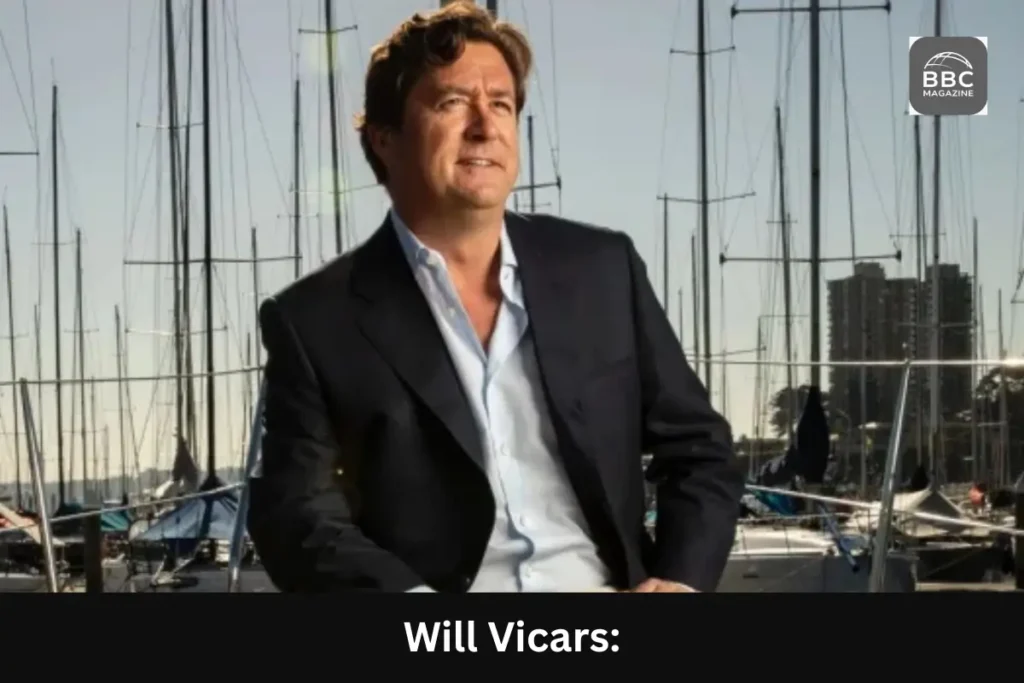
No account of Vicars’ career is complete without acknowledging the scrutiny he has faced during periods of challenging performance. Australian financial journalism has documented episodes in which Caledonia’s results lagged broader global benchmarks, particularly during environments favouring diversified or momentum-based strategies.
These periods intensified debate around the risks inherent in concentrated portfolios. Vicars has been portrayed as maintaining adherence to Caledonia’s underlying philosophy during such times, resisting calls for significant strategic shifts. This stance has been interpreted differently by observers, with some praising discipline and others questioning adaptability.
The persistence of this debate has ensured that Vicars remains central to discussions about the future of active management.
Institutional Reassessment and Industry Context
From time to time, institutional investors have reassessed their exposure to Caledonia, reflecting broader trends in portfolio construction and risk tolerance. Such decisions are commonplace within funds management, but they have attracted attention due to Caledonia’s distinctive approach and the prominence of its leadership.
These developments have contributed to wider industry conversations about patience, accountability and alignment between managers and investors. Vicars’ career has frequently been cited as an example of how conviction-based strategies test institutional comfort during periods of divergence from benchmarks.
Governance and Broader Market Involvement
Beyond portfolio management, Vicars has also been linked through company documentation and market records to governance roles, including involvement at board level. These associations underscore his influence beyond day-to-day investment decisions and highlight engagement with corporate oversight and strategic direction.
Such roles add an additional dimension to Vicars’ professional profile, positioning him not only as an investor but also as a participant in broader market governance discussions.
Visibility in Australian Financial Media
Will Vicars’ media presence has been shaped largely by editorial coverage rather than direct engagement. He appears frequently in Australian Financial Review reporting, including analytical features, opinion columns and market commentary.
At times, Vicars has featured in lighter business columns that reflect the culture of Australia’s financial community, but even these references remain anchored in his professional role. His visibility arises from relevance rather than promotion, reinforcing an image of a market participant focused on outcomes rather than attention.
Reputation Management and Professional Challenges
As a high-profile investment leader, Vicars has encountered moments where media reporting prompted formal responses. In such instances, representatives acting on his behalf have addressed claims considered inaccurate, reflecting the reputational sensitivity associated with senior market roles.
These episodes highlight the scrutiny faced by those whose decisions influence significant capital flows. They also demonstrate the importance of reputation management in maintaining professional standing within a closely watched industry.
Position Within the Australian Investment Community
Within Australia’s investment sector, Vicars is regarded as a serious and disciplined practitioner. His standing is derived from longevity, responsibility and consistency rather than visibility or commentary.
Peers and analysts recognise that his approach requires resilience, particularly in an environment increasingly shaped by passive investing and rapid performance comparison. This has positioned Vicars as a representative of a style of investing that values judgement, research depth and long-term belief.
Influence on Market Thinking
Although Vicars does not actively shape public discourse, his career has influenced broader thinking about active management. Discussions around concentration, patience and conviction often reference Caledonia’s experience under his leadership.
These conversations extend beyond individual outcomes, touching on fundamental questions about how capital should be allocated in global markets and what role active managers should play in an increasingly automated investment environment.
Longevity and Continuing Relevance
What distinguishes Vicars from many contemporaries is the durability of his relevance. Despite shifts in market dynamics and investor preferences, he remains a recurring subject in Australian financial commentary.
This longevity reflects both the scale of his role and the distinctiveness of his approach. In an industry defined by change, Vicars represents continuity and adherence to principles that have long underpinned active investing.
Conclusion
Will Vicars’ career illustrates the demands and consequences of conviction-based investing at scale. As Co-Chief Investment Officer at Caledonia, he has shaped a strategy that challenges prevailing trends and invites sustained scrutiny.
Through multiple market cycles, Vicars has remained committed to a long-term approach grounded in research and belief. His professional journey highlights the tension between conviction and consensus that defines modern funds management and ensures his continued relevance within Australia’s financial landscape.
FAQs
Who is Will Vicars?
Will Vicars is an Australian fund manager and the Co-Chief Investment Officer of Caledonia, a Sydney-based global equities investment firm. He is known for a long-term, high-conviction investment approach and is frequently referenced in Australian financial media.
Will Vicars and Caledonia still be deep in the red?
Caledonia has faced periods of significant underperformance in recent years, particularly during market conditions favouring diversified or index-tracking strategies. Performance has fluctuated over time, reflecting the firm’s concentrated, long-term investment style rather than short-term positioning.
Who owns Caledonia Investments?
Caledonia is not a listed company. It is owned and controlled by its senior investment principals, with ownership concentrated internally rather than held by public shareholders.
Who is the chairman of Caledonia Investments?
Caledonia does not operate with a publicly prominent chairman role like a listed company. Leadership is centred around its senior investment principals, including its chief investment officers.
What are the big 5 investment firms?
The largest global investment firms are commonly recognised as BlackRock, Vanguard Group, Fidelity Investments, State Street Global Advisors and J.P. Morgan Asset Management. These firms dominate asset management through scale and global reach.
How much did Dr. Michael Burry make?
Dr. Michael Burry earned substantial profits during the global financial crisis through his hedge fund, Scion Asset Management. While exact personal earnings are not disclosed, reports indicate returns in the tens to hundreds of millions of dollars from performance fees and investments.
Who owns 93% of the stock market?
The majority of stock market wealth is held by institutional investors and the wealthiest households. In developed markets, the top tier of investors controls most equity ownership through funds, pensions and direct shareholdings.
Who are the big 3 asset managers?
The “Big Three” asset managers are BlackRock, Vanguard Group and State Street Global Advisors. Together, they are the largest shareholders in many major global companies due to their index and passive investment products.